
Blanquette de Limoux: Three Glasses, Two Methods, One Limoux Story
From a student’s budget bottle to a proper side-by-side tasting of Brut, Demi-Sec and Doux, here’s everything I’ve learned about Limoux’s sparkling wines along the way.
📖 Read Time: Approx. 7 minutes.
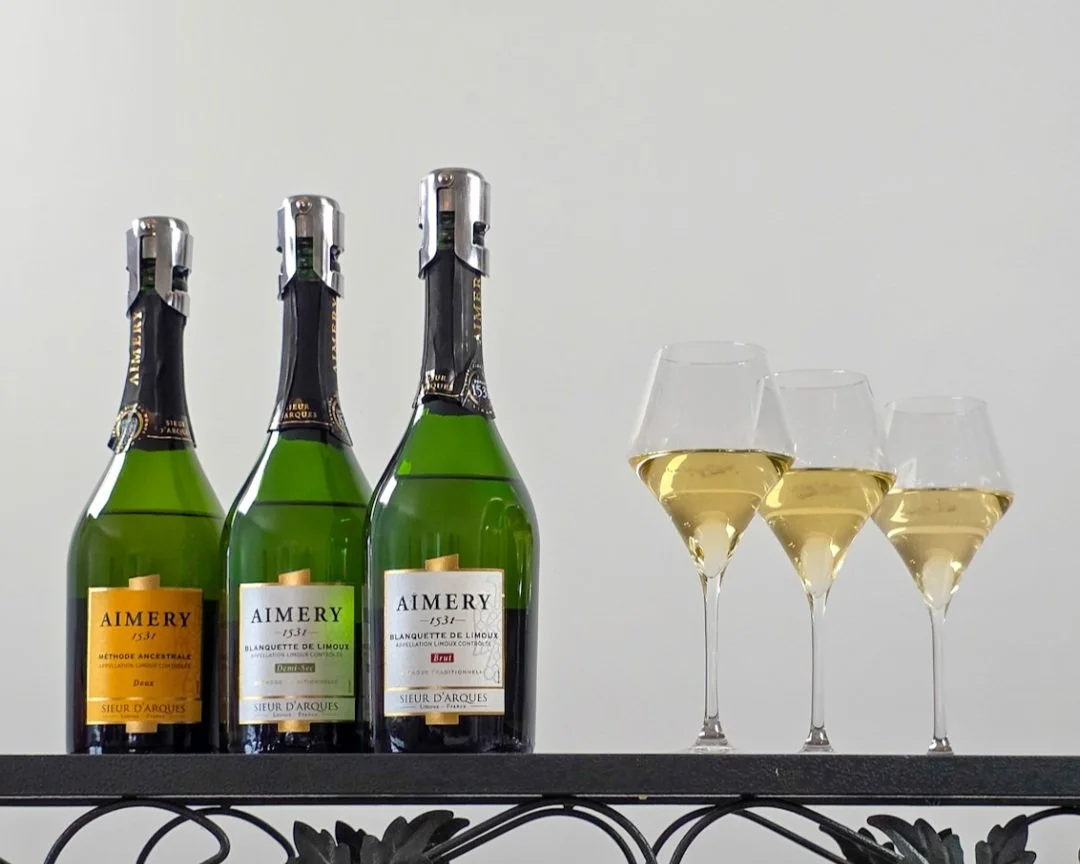
A close-up lineup of the Aimery 1531 range from Sieur d'Arques, Doux, Demi-Sec and Brut, with a glass poured beside each bottle to show the progression across styles.
A personal introduction
Two decades ago, as a student with a curiosity for wine and a very modest budget, Champagne was a luxury saved for once-a-year celebrations. For everything else, there was Crémant.
We drank plenty of Loire and Bourgogne, but the sparkling wines of Limoux held a special place on my table. They were delicious, incredibly budget-friendly, and, most importantly, perfect with the bold, spicy dishes I loved to cook.
Back then, the labels were a bit of a puzzle. Crémant de Limoux, Blanquette de Limoux, Méthode Ancestrale, I had no idea what set them apart.
There were even dismissive whispers that Limoux was merely a cheap substitute for those who couldn't afford Champagne. What I didn't realise at the time was that Blanquette was anchored by Mauzac, a local grape carrying centuries of history, and that Limoux had a fascinating story of its own to tell.
But honestly, the technicalities didn't matter. What mattered was that the wine was delicious. It made its way onto my table, worked with the food I loved, and brought joy to the occasion.
That realisation became part of the philosophy I carry with me today: wine is meant to be enjoyed first. Understanding terroir, dosage and grape varieties can come later, and only if you want it to. Fine wine should never feel like an exam.
Perhaps that is why, all these years later, I found myself returning to Blanquette de Limoux with fresh eyes and three glasses in front of me.
A sparkling wine with a rather remarkable history
Limoux is widely credited with producing the world's first sparkling wine, with 1531 traditionally associated with the beginnings of sparkling-wine production at the Abbey of Saint-Hilaire.
The story is a human one. According to the traditional account, the bubbles were discovered almost by accident. During the cold winter months, fermentation could slow or stop. When temperatures rose again in spring, the yeast became active, fermentation resumed and carbon dioxide accumulated in the bottle.
Suddenly, the quiet wine was sparkling.
Rather than treating the unexpected fizz as a fault, the monks began exploring the phenomenon and developing ways to reproduce it. Whether you approach the story as history, tradition or a little of both, there is something irresistible about it: one of the world's great sparkling-wine traditions may have begun with somebody noticing that a bottle had unexpectedly come back to life.
And that brings us to the name itself. Blanquette comes from the local character of the Mauzac grape, traditionally associated with a pale, almost whitish bloom on its grapes and leaves.
Meet Mauzac, the grape behind Blanquette
If Champagne has Chardonnay and Pinot Noir, and many sparkling wines around the world rely heavily on familiar international varieties, Blanquette has something local at its heart.
Mauzac.
For Blanquette de Limoux, Mauzac must make up at least 90% of the blend, with Chardonnay and/or Chenin Blanc permitted for the remainder. It is not simply a supporting actor. Mauzac gives Blanquette part of its identity, its fresh orchard-fruit character, citrus brightness and distinctive floral profile.
Tasting three bottles side by side makes that character particularly easy to see.
Three glasses, two methods
For this tasting, I poured three 1531 wines from Aimery by Sieur d'Arques: a Brut, a Demi-Sec and a Doux Méthode Ancestrale.
At first glance, they might look like a simple progression of sweetness. They aren't. The Brut and Demi-Sec are made by the traditional method, while the Doux is made using the Méthode Ancestrale, giving us two different approaches to sparkling wine within the Limoux tradition.
🥂 1531 Blanquette de Limoux Brut
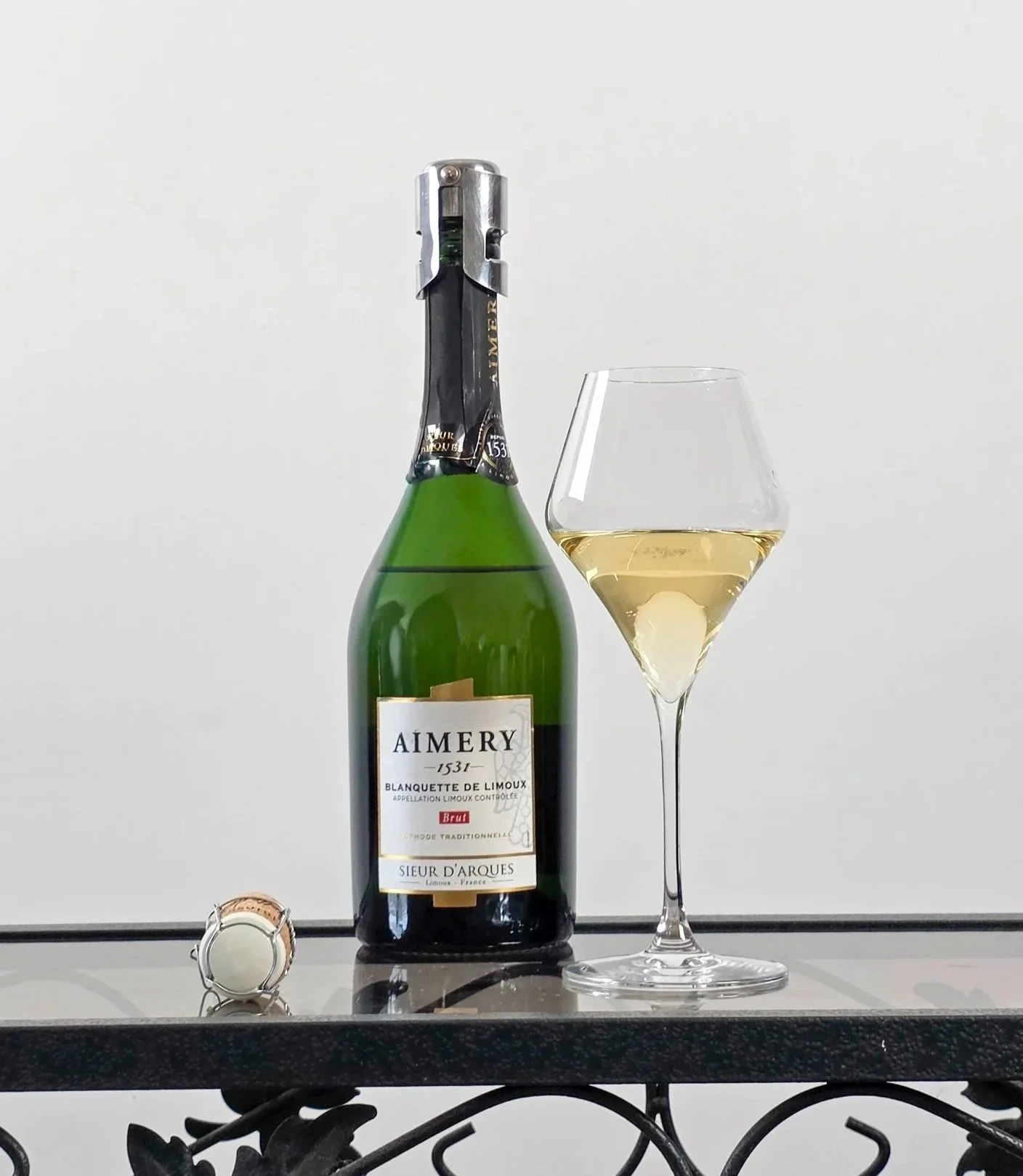
Tasting notes for Aimery Blanquette de Limoux Brut by Sieur d'Arques, bone dry, citrus driven, and a natural match for spiced, fried food.
The Brut opens with a tight, persistent stream of fine bubbles. The nose is pronounced and fresh: fresh lime, green lemon, green apple, white peach, lemon blossom and white pear.
On the palate, it is bone dry, with high, vibrant acidity and a medium body. The fruit is crunchy rather than ripe and heavy, with a distinctly citrus-driven character. The finish is medium-plus, crisp and exceptionally refreshing.
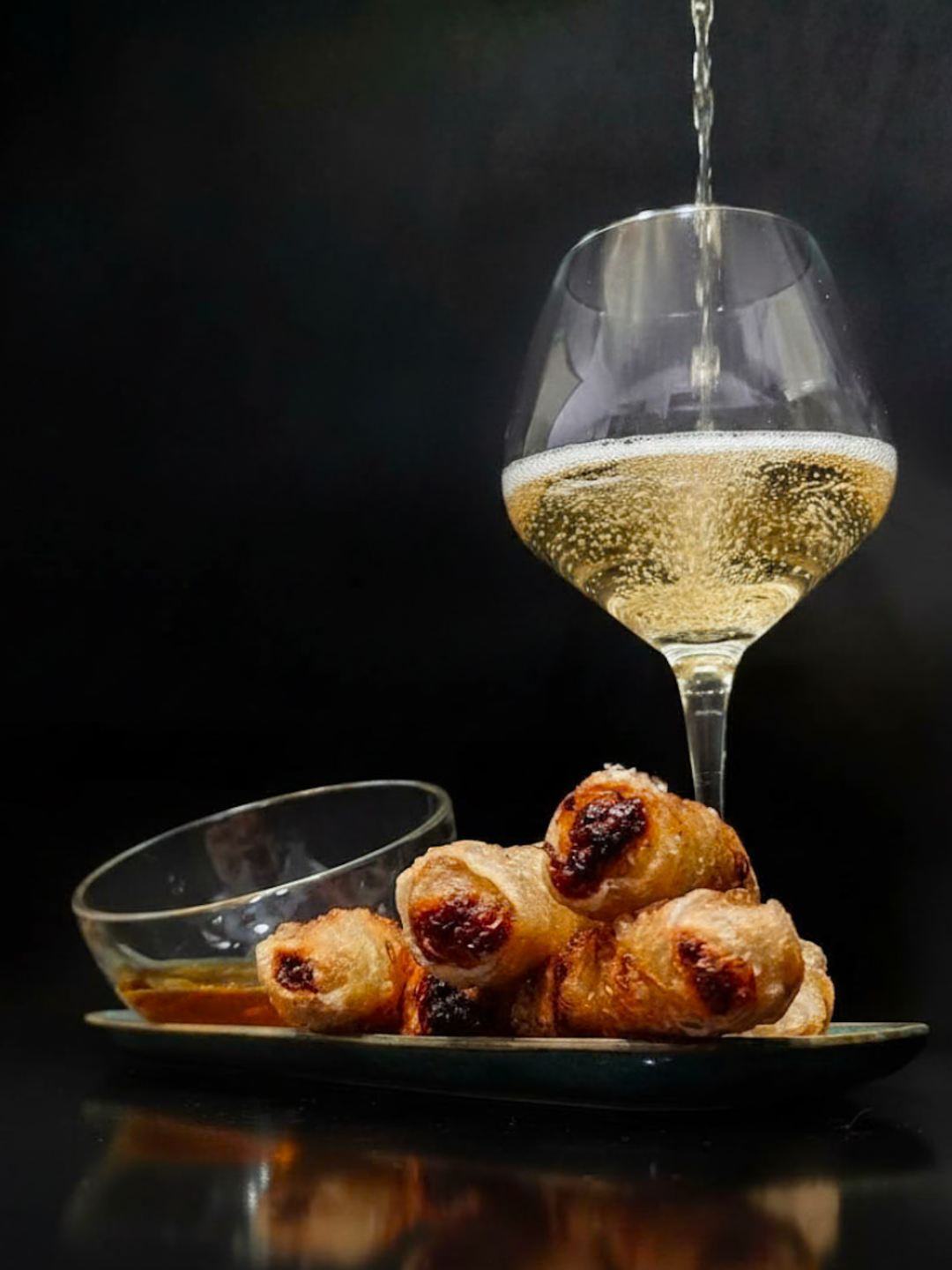
This is the wine that immediately made me think of food. It was the bottle I reached for with my crispy, spiced vegetable samosa rolls, and the pairing made sense. The acidity cuts through the richness of the fried pastry, while the fine bubbles refresh the palate between bites.
🌶️ With East African Food
I would happily take this beyond samosas.
Think bhajia, especially vegetable bhajia with coriander and chilli. Or viazi karai, where the crisp fried potato and aromatic spices need a wine with enough acidity to keep the palate moving. The Brut would also work alongside ndengu samosas, spiced lentil fillings or even a plate of pilau where the spices are aromatic rather than overwhelmingly hot.
The principle is simple: fried, spiced and aromatic foods love freshness.
🍑 1531 Blanquette de Limoux Demi-Sec
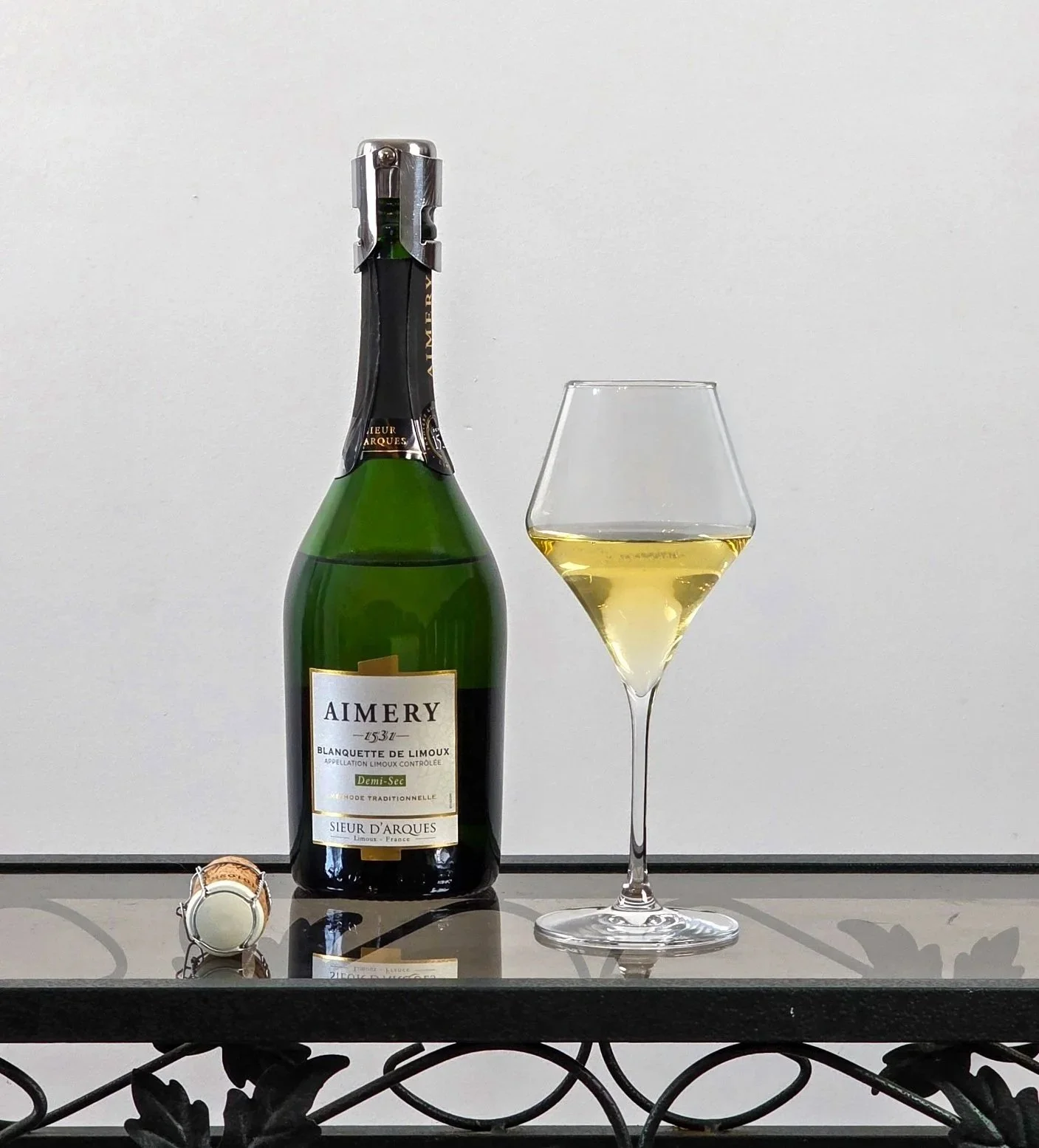
The Aimery 1531 Blanquette de Limoux Demi-Sec, medium sweet with ripe stone fruit, poured beside its bottle.
The Demi-Sec tells a different story. The bubbles remain tight, persistent and fine, but the nose becomes noticeably more generous, ripe peach, apricot, fresh lime, lychee and orange blossom honey.
On the palate, it is medium-sweet, but this is where the acidity becomes particularly impressive. It is razor sharp, cutting through the residual sugar and keeping the wine clean and structured rather than heavy. The finish is medium-plus, with lingering lime zest, honey and ripe apricot.
This is where sweetness becomes useful at the table. Rather than thinking of sweetness as something reserved for dessert, think of it as a tool for handling heat, spice and caramelisation.
🌶️ With East African food
I'd pour this with chicken or beef pilau, particularly if the dish has plenty of warm spices but isn't aggressively hot. It could also work with nyama choma served alongside a spicy tomato or chilli-based kachumbari. And I'd be tempted to try it with mishikaki, particularly if there is some caramelisation from the grill.
The slight sweetness gives the wine enough generosity to meet those darker, savoury flavours, while the acidity keeps everything lifted.
🍯 1531 Doux Méthode Ancestrale
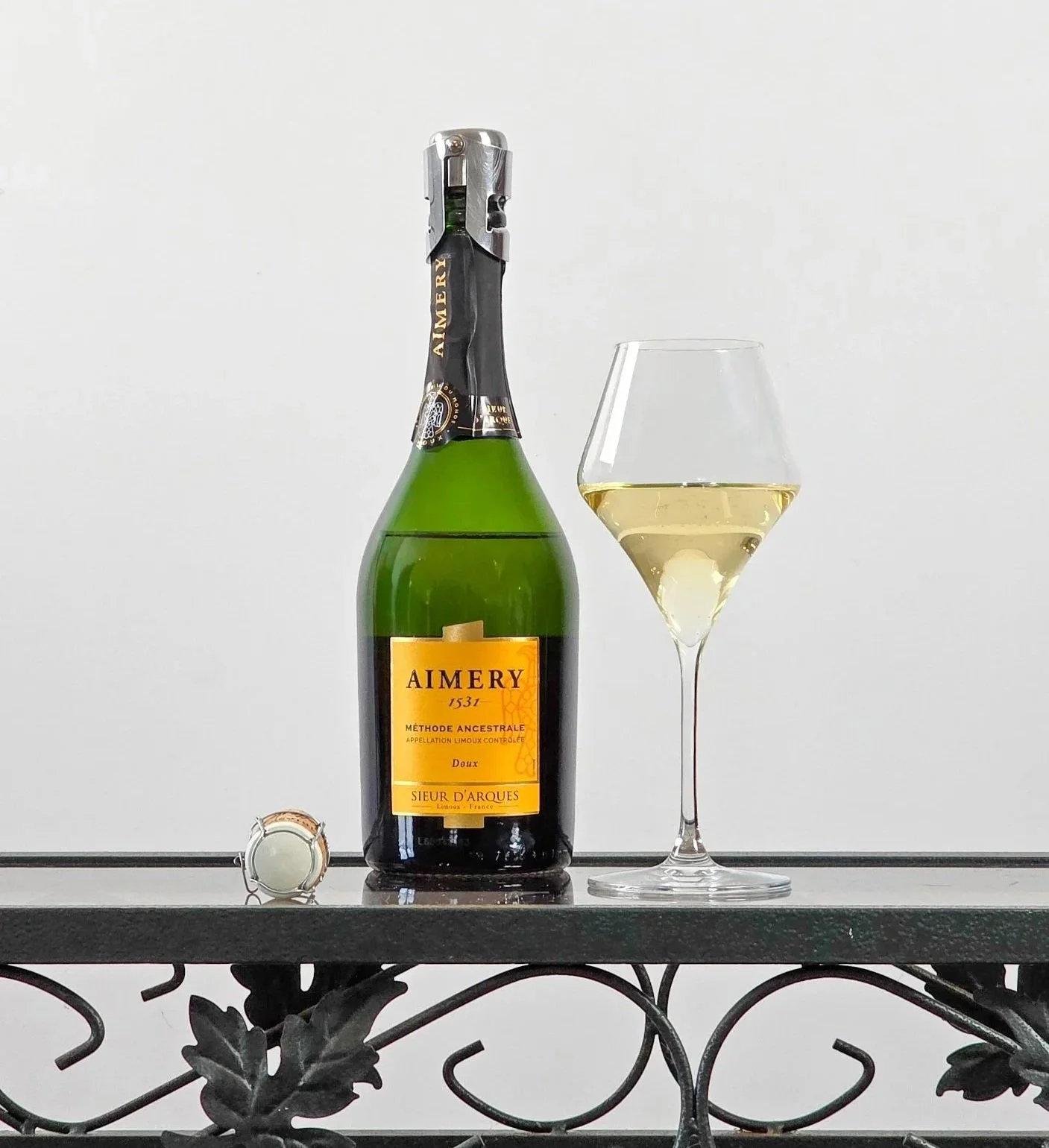
Aimery 1531 Méthode Ancestrale Doux, fully sweet and honeyed, poured beside its bottle.
And then we arrive somewhere completely different. The Doux is sweet, but it doesn't feel weighed down by its sweetness. The nose is pronounced and luscious, with raw honey, beeswax, grilled apple, pineapple, passionfruit and golden sultanas.
On the palate, it is rich and fruit-forward, but once again the acidity is doing the heavy lifting. It keeps the sweetness in check, preventing the wine from becoming cloying and giving the finish a remarkably refreshing quality. The final impression is a tropical, honeyed lift.
This is not the wine I would automatically reach for with my samosas. And that's precisely why I find it so interesting.
🍍 With East African flavours
I'd move towards sweet, aromatic and spicy combinations. Think mandazi, especially lightly spiced mandazi with cardamom. Or a coconut-based dessert, where the wine's tropical fruit and honeyed character can echo the coconut. It could also be interesting with ripe mango dressed with a little chilli and lime, where the sweetness of the wine meets the fruit while its acidity mirrors the citrus. If you wanted to get playful, I could imagine it alongside a spiced banana dessert, particularly one incorporating cardamom or ginger.
So, which one would I choose?
That's the wrong question, and I mean that in the best possible way. The Brut isn't competing with the Demi-Sec, and the Demi-Sec isn't competing with the Doux. They are different tools for different moments.
The Brut is the one I'd reach for when I want freshness, precision and food-friendly sparkle. The Demi-Sec gives me more generosity while retaining that Limoux acidity. And the Doux is where I want to slow down and let sweetness, fruit and texture take centre stage.
Three glasses, two methods, very different experiences, and yet they all lead back to the same place: Limoux.
Why Limoux still matters to me
Two decades after I first encountered these wines as a student, I find myself appreciating them for completely different reasons.
Back then, I loved them because they were delicious and affordable. Today, I can taste the Mauzac. I can analyse the acidity, dosage, texture and finish. I can talk about production methods and appellation rules.
But the reason I still love them hasn't changed. They are joyful wines. They belong at the table. They work with food. They don't require you to know everything before you are allowed to enjoy them.
And perhaps that's the lesson I took from Limoux all those years ago without even realising it. Wine doesn't have to impress you before it can delight you. Sometimes, a bottle simply needs to make you reach for another bite of food and another sip of wine.
And that's more than enough.