
A dish built note by note from the tasting notes of Weingut Stefan Lutz's Tempranillo.
📖 Read Time: Approx. 4 minutes.
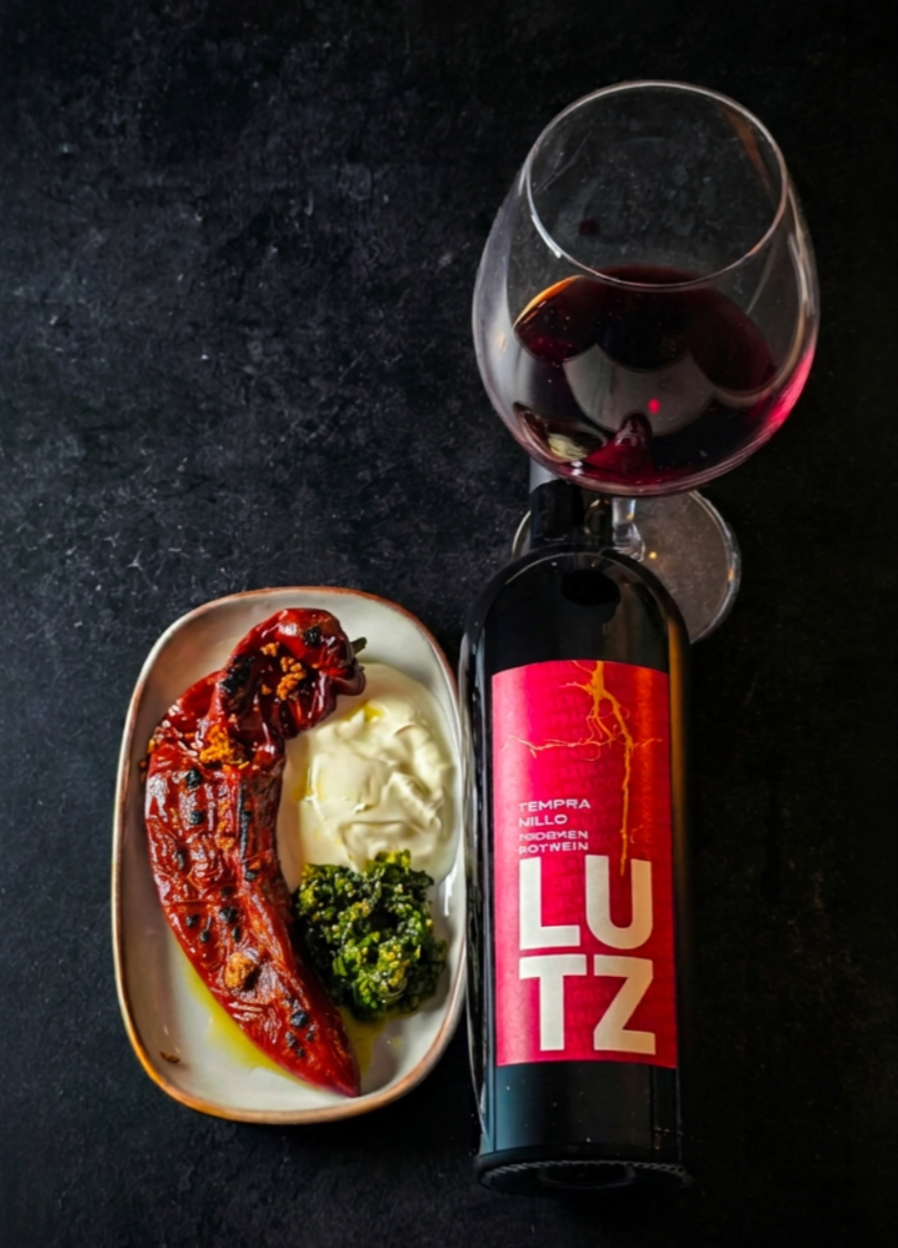
The pairing: roasted sweet peppers on herb yoghurt with Weingut Stefan Lutz Tempranillo 2025.
When I tasted the 2025 Tempranillo from Weingut Stefan Lutz in Rheinhessen, I wrote down everything the wine told me before I thought about food. (The story behind the wine, from a Christmas party to a Prachtkerl on the label, is in the full article.) Then I did what I always do: I built a dish backwards from the glass.
The idea is simple. Read the wine's notes, then choose ingredients that echo them, contrast with them or bridge them. This is the result: sweet roasted peppers, a spice paste of coriander, cumin and black pepper, and a cool herb yoghurt, with warm wholemeal bread on the side. It is meat-free, it takes about half an hour, and it is made to flatter a fresh, fruit-driven red.
How the pairing was built
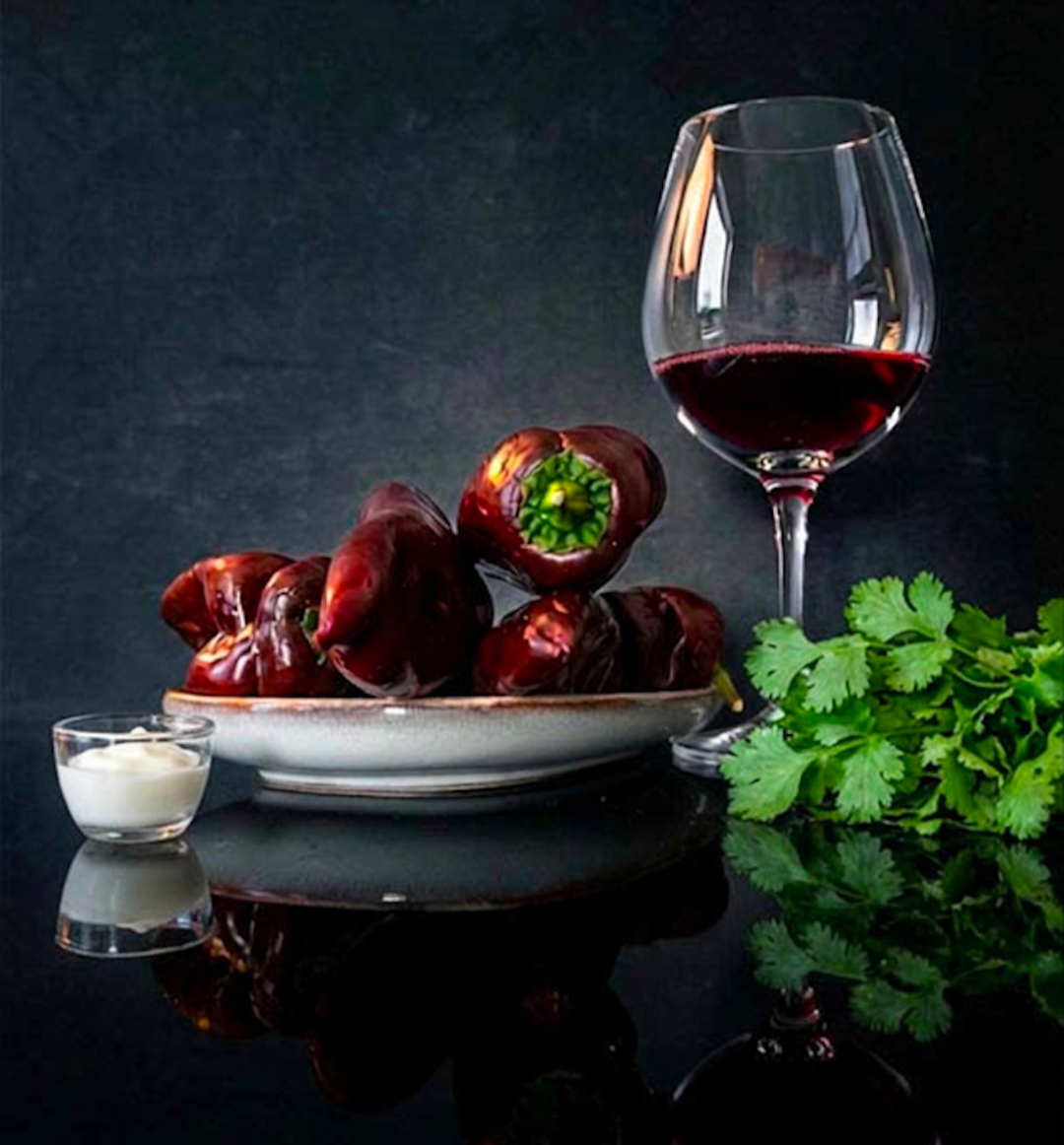
Where it starts: sweet peppers, fresh coriander and brassé yoghurt, with a glass of Tempranillo.
My tasting note reads like this: blackcurrant, raspberry, strawberry and blueberry on the nose, then violets and red roses, then black pepper, a touch of toast and vanilla from the oak, with undergrowth and wet stones in the background. On the palate the wine is bone dry and fresh, with supple tannins and juicy, crunchy fruit.
Each of those notes became a decision in the kitchen:
Berries. Roasted sweet peppers have a savoury sweetness that mirrors the fruit without turning the plate into dessert.
Violets and red roses. Fresh coriander and toasted coriander seed, whose citrus and floral side lifts the dish in the same way.
Black pepper. Black pepper goes into the spice paste as a direct echo, with cumin for depth.
Toast and vanilla. The American and German oak adds a hint of toast and vanilla. A light char on the peppers, toasted almonds and warm bread answer the toast, while the soft sweetness of the roasted flesh answers the vanilla.
Undergrowth and wet stones. The nutty, earthy wholemeal bread and the cumin meet the wine's earthy background.
Freshness and tannins. A little lemon and the tang of the yoghurt match the wine's freshness, while the yoghurt and avocado oil add fat that cushions the supple tannins and keeps the texture silky.
Weight. The wine has more body than peppers alone, so the toasted almonds and the bread give the plate enough substance to stand beside it.
The recipe
Serves 2. About 30 minutes. Contains nuts and dairy.
Spiced peppers
287 g sweet chocolate bull's horn peppers, halved lengthwise and seeded
10 ml avocado oil, for roasting
5 ml avocado oil, for the spice paste
2 g coriander seeds (about 1 teaspoon), toasted and ground
1.5 g cumin seeds (about ¾ teaspoon), toasted and ground
0.5 g black pepper, freshly ground
2 g garlic (about ½ clove), grated
1 g fine salt
Herb yoghurt
100 g plain whole-milk yaourt brassé
10 g fresh coriander, leaves and tender stems
12 ml avocado oil
Zest of ¼ lemon and 3 ml juice
1 g fine salt
To finish
10 g flaked almonds or sunflower seeds, toasted dry for 3 to 4 minutes
3 ml avocado oil and a pinch of the ground coriander, for the crumbs
5 ml avocado oil, for drizzling
2 thick slices (about 60 g each) of rustic wholemeal bread, warmed
Method
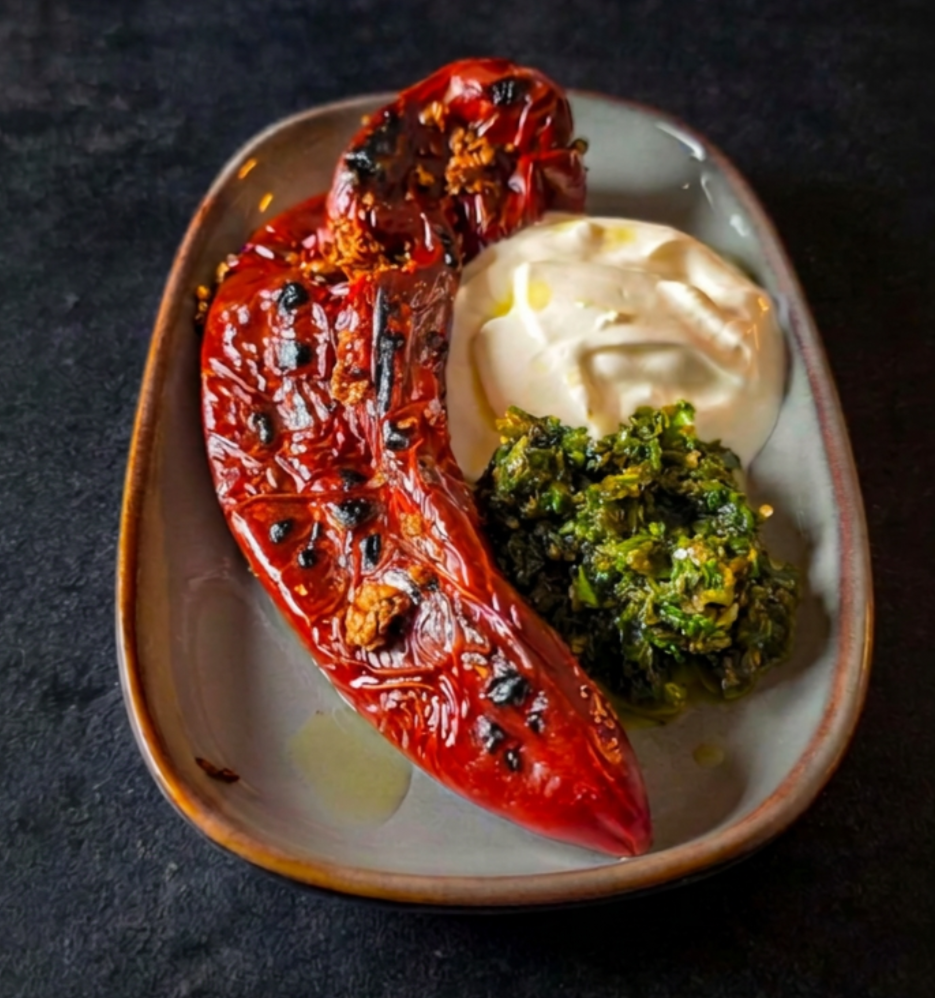
Roasted, spiced and lightly charred: sweet pepper with coriander, cumin and black pepper on herb yoghurt.
Toast the spices. Toast the coriander and cumin seeds in a dry pan for 1 to 2 minutes until fragrant, then grind. In the same pan, toast the chopped almonds for 2 to 3 minutes, until golden and fragrant.
Roast the peppers. Toss the pepper halves with 10 ml of avocado oil and the salt. Roast cut side up at 210 °C (about 195 °C fan) for 12 minutes. In a small air-fry oven, roast at about 200 °C for 10 minutes.
Add the spices. Mix the ground spices, black pepper, garlic and 5 ml of avocado oil into a paste and brush it over the peppers. Roast 6 to 8 more minutes (about 5 in the air-fry oven), until soft and lightly charred at the edges. Adding the spices late stops them burning and turning bitter.
Make the herb yoghurt. If the yoghurt is loose, drain it in a sieve lined with a cloth for 15 to 30 minutes. Chop or blitz the coriander with the avocado oil, lemon zest, lemon juice and salt. Spoon it beside the yoghurt, as I did in the photos, or fold it through if you prefer a green yoghurt.
Serve. Spoon the yoghurt onto each plate, set the warm pepper beside it, add a spoonful of the coriander, and finish with the toasted almonds and a drizzle of avocado oil. Serve with the warm bread.
The times are a guide. Thin-walled peppers cook faster, so check them at the early end of each range, and aim for a light char, not black, because heavy smoke would compete with the oak in the wine.
Serving
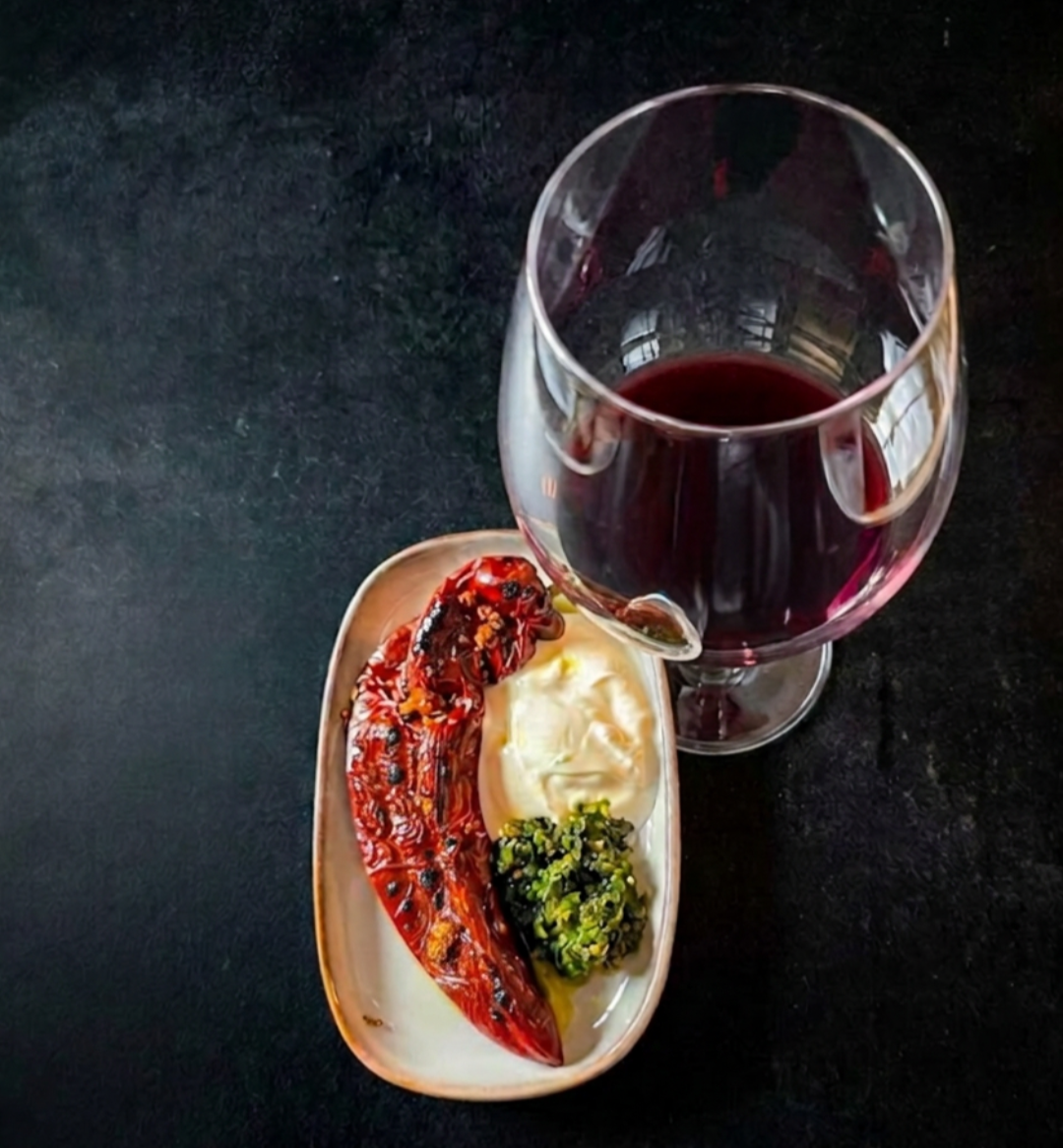
Berries, spice and toast: the first sip of Tempranillo with the roasted peppers.
Pour the wine at 16 to 17 °C, a little cool, so the freshness stays bright. Serve the peppers warm over the cool yoghurt, with the warm wholemeal bread for scooping. I spoon the coriander beside the yoghurt instead of folding it in, which gives the plate more depth and lets each forkful have as much green as you like.
What to try next
This is a first-test formula, and I change one thing at a time. Next on my list:
Crispy white beans. About 80 g of cooked white beans, dried well, tossed with 5 ml of avocado oil, 0.5 g each of ground coriander and cumin and a pinch of salt, then roasted at 200 °C for 15 to 18 minutes. Scattered over the peppers, they add crunch, toast and body.
White pepper. Swap the black pepper for 0.25 g of white pepper. It is earthier and less aromatic, so I want to see how it sits with the wine.
A heartier plate. A savoury lentil and white bean cake with green onions, garlic, cumin and toasted coriander seed, for when you want more weight next to this wine. The recipe will follow.
To read how this wine came to exist, from a Christmas party to a Spanish grape on Rheinhessen soil, see the full story of the Weingut Stefan Lutz Tempranillo.
What would you cook for this wine? Tell me in the comments.
Stay curious, darlings.
Wine kindly sent by Weingut Stefan Lutz. Recipe, tasting notes and opinions are my own.