
A Different Calendar: What France's Early Harvest Says About the 2026 Vintage
From Limoux to Champagne, growers across France are picking weeks earlier than expected. Here's what the timing reveals about this year's vintage.
📖 Read Time: Approx. 5 minutes.
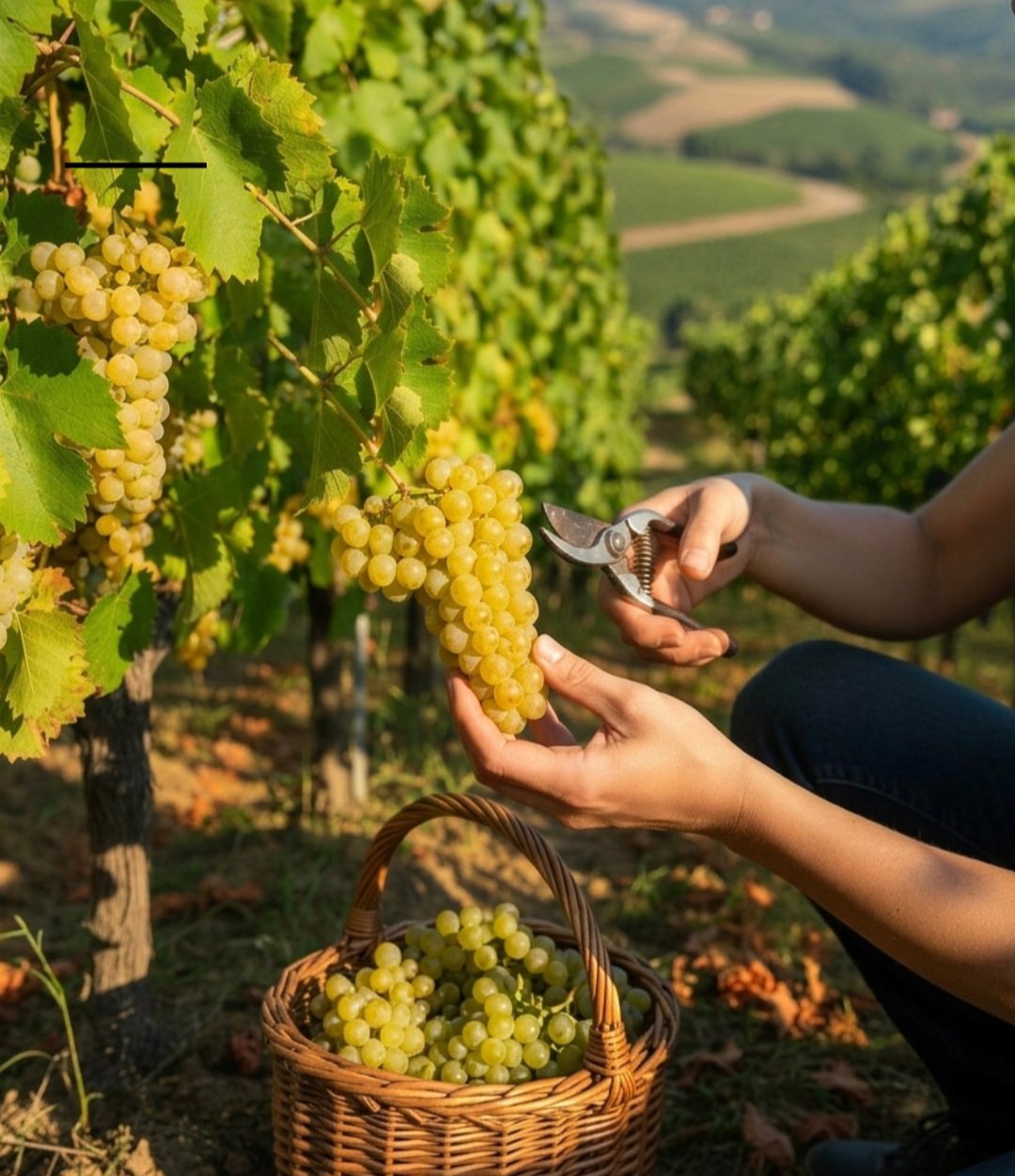
A grower cuts a cluster of grapes by hand in Limoux, part of a harvest that began nearly three weeks earlier than usual this year.
It was only early August, and the phone had already rung in Limoux.
A friend of mine returns every summer to help with the grape harvest there. For years, the rhythm has been almost predictable: the call usually comes in mid-August, the shears are collected, and another vendange begins. Not this year. The call came weeks earlier than expected, and even after years of harvesting, she told me she was caught off guard.
Then came the photographs: hands holding secateurs, baskets filling with freshly cut grapes, vineyards already alive with the familiar movement of harvest.
At first, I assumed this was simply a Limoux story. It isn't. The more I looked, the clearer the pattern became: across France, vineyards are entering harvest earlier than expected, with several regions recording some of their earliest starts on record.
A harvest calendar rewritten
In Limoux, several producers began cutting grapes around 30 July, an exceptionally early start for the region. For producers of Crémant de Limoux and Blanquette de Limoux, timing like this matters enormously. Sparkling wine depends on freshness and vibrant acidity, so the decision to harvest isn't only about whether the grapes are ripe. It's about catching the precise moment when fruit character, acidity and structure are still in balance.
Limoux isn't alone. The same story is unfolding region by region:
| Region | Early Harvest Signals |
|---|---|
| Corbières (Languedoc) | First cuts began 16 July, an absolute record for the region |
| Limoux | Harvest began around 30 July |
| Bordeaux | Crémant harvest began this week; the CIVB is calling it the earliest start ever recorded, in what may be every French vineyard region at once |
| Champagne | A grower in the Aube began picking Chardonnay on 6 August, nearly a week ahead of the Comité Champagne's planned date; official harvest didn't start until 21 August in 2025 |
| Burgundy | By early July, vines were running nearly a week ahead of 2020, previously the earliest vintage on record at the Hospices de Beaune |
Different regions, different grapes, different climates, yet the same word keeps appearing in growers' reports: precocious.
Why harvest is happening so early
The short answer is that the vines never really slowed down. A mild winter encouraged early activity. A warm, dry spring accelerated growth. Then repeated heatwaves between May and July pushed the season forward even faster, with each stage, budburst, flowering, véraison, arriving on the heels of the last instead of at its usual pace.
The result: grapes reaching maturity three to four weeks earlier than normal in some areas.
In the Pyrénées-Orientales, flowering came 8 days ahead of 2025 and 13 days ahead of the twenty-year average, with véraison already underway on the earliest varieties by mid-July.
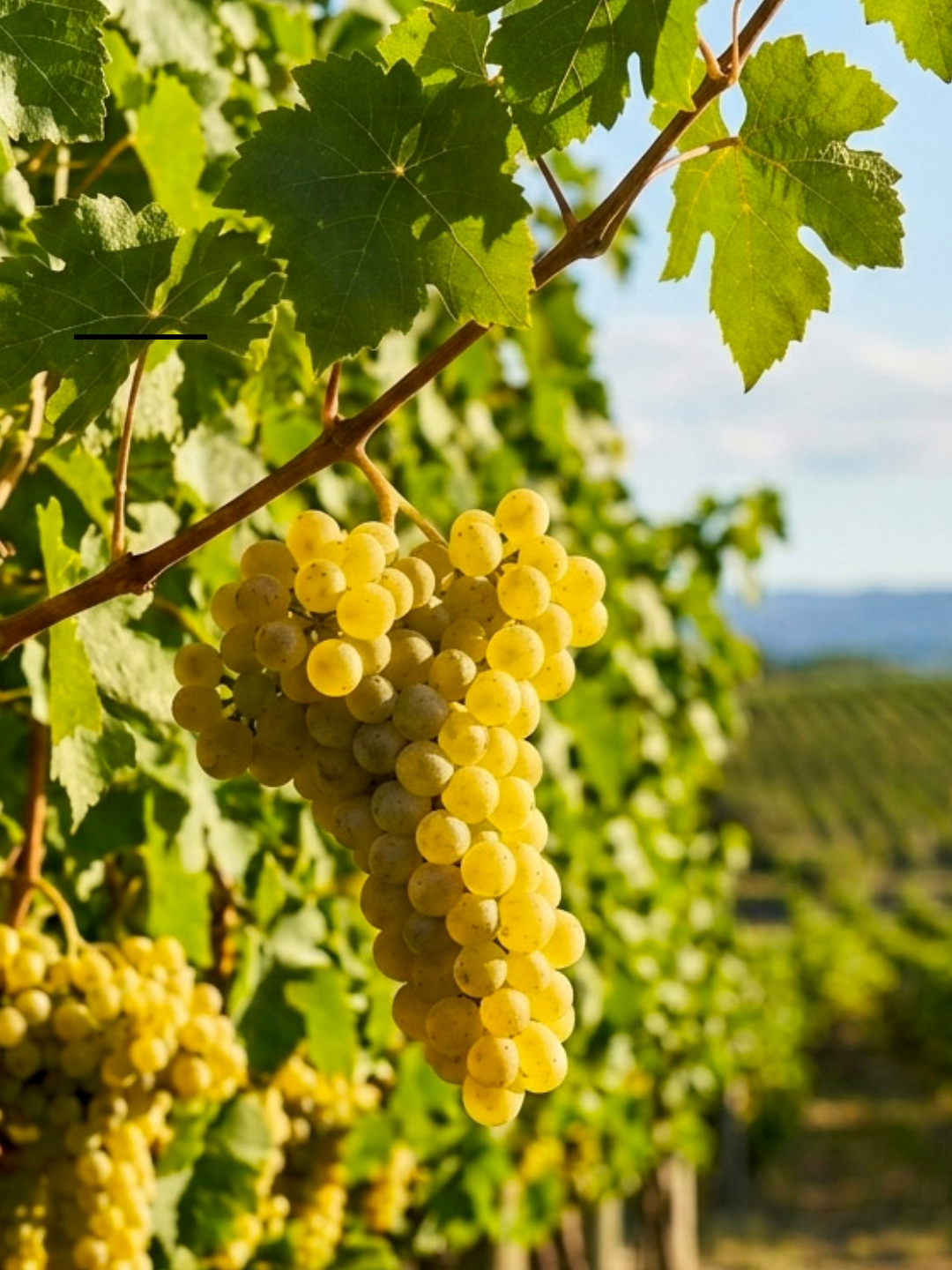
Close-up of ripe Chardonnay grapes on the vine in Limoux, their golden colour and dusty bloom signalling they're ready for the early 2026 harvest.
Earlier doesn't automatically mean better
An early harvest isn't a verdict on the vintage. It's simply a different set of decisions, made faster than usual.
Warm conditions build sugar quickly, but acidity falls just as fast, and for winemakers that's the real balancing act: picking early enough to preserve freshness while still allowing flavour and phenolic maturity to develop. For sparkling wines, this matters even more. Crémant, Blanquette and Champagne all lean on acidity for their identity, the brightness that gives them structure and ageing potential. The Aube grower I mentioned put it plainly: wait a few extra days chasing more ripeness, and the acidity can drop enough to tip the wine toward vinegar instead.
The window to get it right is simply narrower this year.
The human side of an early vintage
Beyond the vineyard, an early harvest scrambles the practical side of the season. Crews booked for mid-August, equipment serviced on the usual timeline, contracts written around dates that no longer hold. My friend's surprise phone call is a small, human version of a much bigger adjustment happening at wineries across the country right now.
This isn't entirely new. Many Champagne growers can trace the shift across generations, from their grandparents' late-August harvests to their own increasingly early ones. What's different in 2026 is how many regions are hitting record territory in the same season, rather than one area having an unusually early year on its own.
A vintage shaped by adaptation
Only recently, many of us were watching the wildfires that affected parts of France, including areas near Bordeaux, a stark reminder of how exposed vineyards are to extreme conditions. These harvest photographs from Limoux tell a different side of the same story. Despite the challenges, the vineyard keeps its rhythm. Growers adapt, watch the vines closely, and make their calls day by day.
Watching the 2026 vintage unfold
It's far too early to know what the 2026 vintage will taste like. The coming weeks will decide that, as fermentation gets underway and each region works out how to turn an unusual season into wine.
What's already certain is how this vintage began: with a phone call in Limoux, a friend picking up her shears weeks sooner than planned, and growers across France adjusting to a calendar that refused to wait for them.
Whatever the season brought, the harvest still came.