
Gironde Under Fire: What the Wildfires Mean for the Region, Its People and Its Wine
Beyond the flames: understanding the impact on the people, landscapes and vineyards of a region I once called home.
📖 Read Time: Approx. 7 minutes.
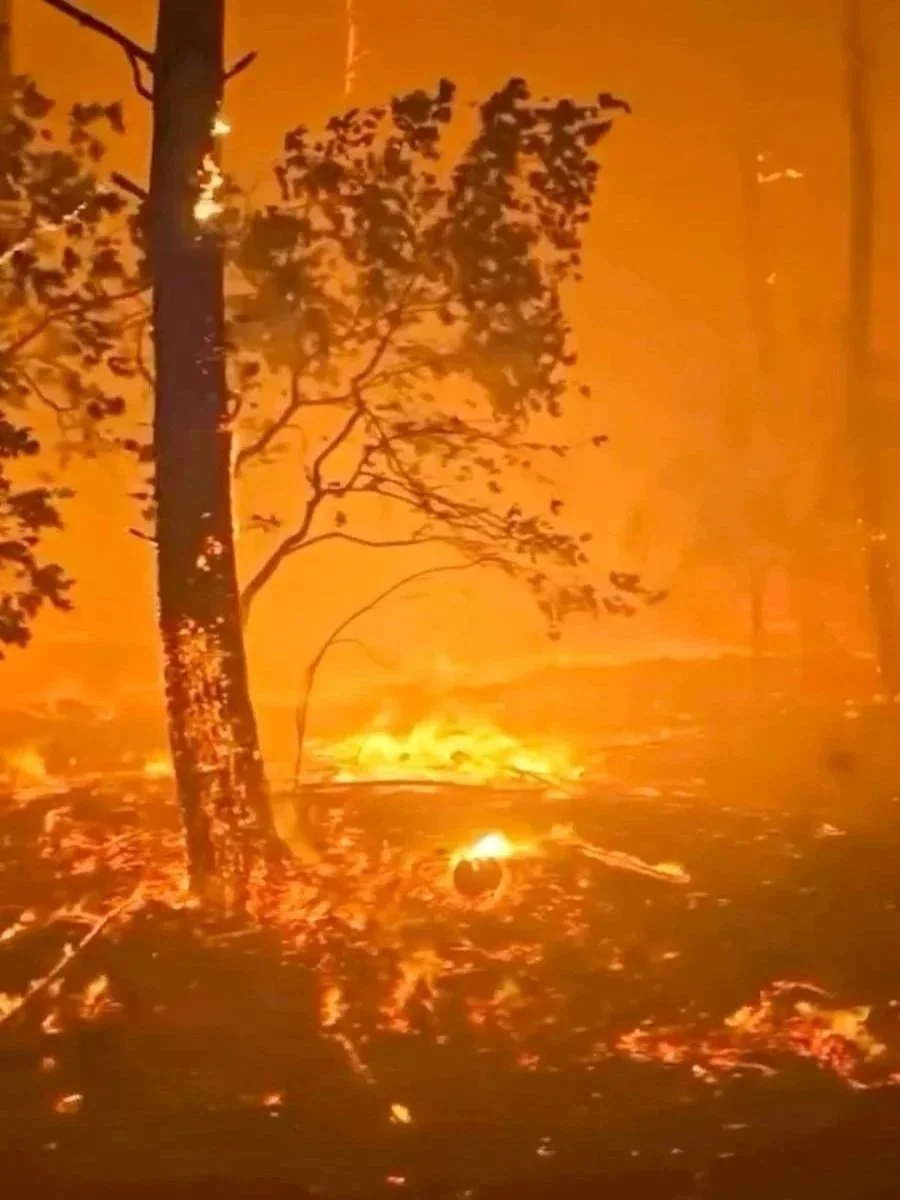
Wildfire burning through forest in the Gironde region near Bordeaux, France, part of the blaze that forced more than 220,000 people to evacuate in July 2026.
Bordeaux has always been more than a name on a wine label to me.
I studied there, lived there as a student, and still return regularly for work as a wine consultant. Cap Ferret, on the nearby Atlantic coast, was once my escape. Swimming, walking the dog along the water, and enjoying simple weekends that felt far removed from anything urgent.
This week, that same region has found itself at the centre of one of France's most serious wildfire emergencies in decades.
The images are difficult to comprehend. Forests ablaze. Communities evacuated. Thousands of people forced from their homes. Firefighters working relentlessly to contain a fire that has behaved in ways that have made it exceptionally difficult to predict.
For me, this is personal. But as someone who works in wine, I also know that many people will be wondering what this means for Bordeaux's vineyards and the 2026 vintage.
So, here is what we know so far.
What Started It
The fire began near Saumos, in the Gironde department west of Bordeaux, on 22 July.
The conditions were already extremely difficult. Prolonged heat, drought, dry vegetation and strong winds created an environment in which fire could spread rapidly through the region's extensive pine forests.
The fire's behaviour has been particularly challenging for those fighting it. Intense fires can generate their own local weather patterns, including powerful winds and pyrocumulonimbus clouds — immense fire-generated clouds capable of creating highly unpredictable conditions.
The result has been a fire that has been exceptionally difficult to control and a rapidly changing situation on the ground.
The Scale of the Crisis
The numbers are difficult to absorb.
More than 220,000 people have been evacuated in Gironde, while the combined number of people displaced or evacuated across the major fires in France and Spain has risen above 300,000.
The Gironde fire has affected approximately 42,000 hectares, while around 240 homes have been destroyed.
Thousands of firefighters, military personnel and security forces have been mobilised, supported by aerial firefighting resources and international assistance.
The human cost is immense.
Behind every evacuation figure is a family that has had to leave home. Behind every damaged building is a community facing uncertainty about what comes next. And behind every hectare of burned forest is an ecosystem that will take years and in some cases generations to recover.
This is not simply a story about Bordeaux wine.
It is a story about people, homes, forests, wildlife and landscapes.
Stabilised Does Not Mean Safe
The latest reports offer a small measure of cautious relief: the fire has been described as stabilised, meaning that it has not been advancing at the same pace as before.
But stabilised does not mean contained.
Flare-ups have continued, new evacuations have taken place in affected areas, and rising temperatures are once again creating challenging conditions for firefighters.
The situation therefore remains active and uncertain.
For those of us watching from outside the immediate danger zone, it is important to remember that a temporary pause in the fire's advance does not mean the crisis is over.
What Does This Mean for Bordeaux's Wine Industry?
For those of us in the wine world, one question naturally follows:
What does this mean for the 2026 vintage?
The honest answer, for now, is that it is too early to know.
I have been in contact with local producers in the region, and the vineyards they have reported on have not been affected by the fires so far.
There is also some cautious reassurance regarding smoke exposure. The grapes are still at an early stage of development, before the period when smoke exposure typically presents its greatest risk of smoke taint.
But this is not a situation where anyone can confidently declare the vintage safe.
Harvest is still weeks away. Weather conditions can change. Winds can shift. Fires can flare up again.
For now, this is a situation to watch closely.
The coming weeks will tell us much more.
A Different Side of the Médoc
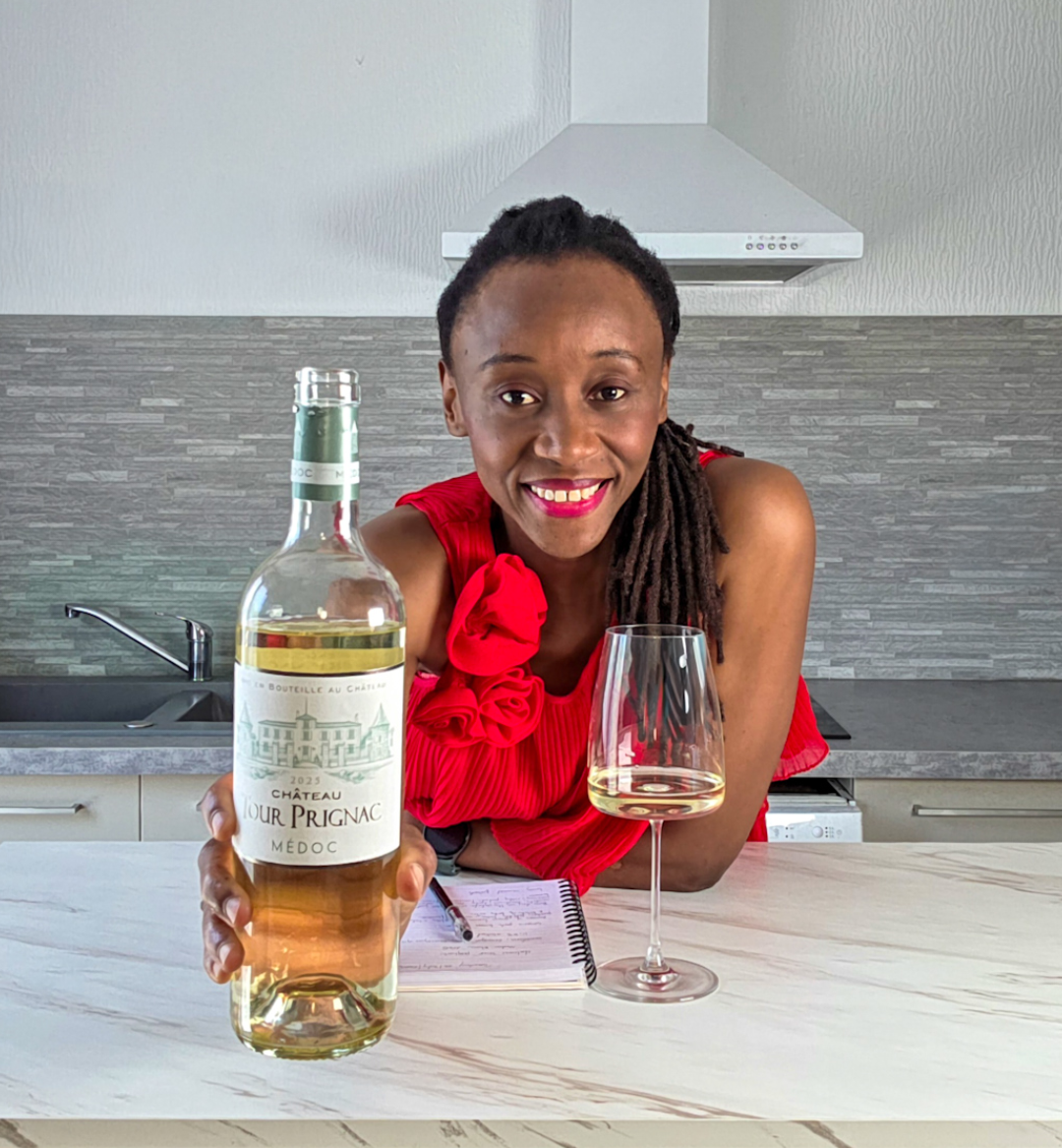
Tasting Château Tour de Prignac 2025, a Médoc Blanc, in a quiet moment away from the headlines. A small celebration of the region's craft during a difficult week.
I can't fight the fires, but I can use my platform to shine a light on the people, places and wines that make this region so special. So today, I'm celebrating a side of the Médoc that many wine lovers may not know as well.
There is another story unfolding in the Médoc. One that has nothing to do with fire, but everything to do with the region's future.
The Médoc is internationally celebrated for its Cabernet-driven red wines. Names such as Margaux, Pauillac, Saint-Julien and Saint-Estèphe have become synonymous with Bordeaux's most famous expressions of Cabernet Sauvignon.
But the region is also changing.
Médoc Blanc represents a lesser-known side of this landscape: white wines made from varieties including Semillion, Sauvignon Blanc, Sauvignon Gris and Muscadelle, offering a very different expression of the region.
It is a reminder that wine regions are not static.
They evolve. They experiment. They adapt.
And perhaps that is one of the most important things to remember when we look at a place like Bordeaux.
A wine region is not simply a collection of famous appellations and prestigious château names.
It is a living landscape.
Beyond the Vines
The wine industry matters to me deeply. It is my profession, my passion and one of the reasons Bordeaux has played such an important role in my life.
But it is important to keep perspective.
The first concern is not what happens to the 2026 vintage. It is what happens to the people who have been evacuated.
To the families who have lost their homes.
To the communities that have been disrupted.
To the firefighters, soldiers and volunteers working in extraordinary conditions.
And to the forests and ecosystems that have been devastated.
The wine story will come later.
Right now, the human story comes first.
Why This Feels Different
We have watched devastating wildfires unfold in Spain, Greece, California and Australia.
For many of us, they have felt distant. Terrible, certainly, but somewhere else.
This time, the distance feels different.
I know this landscape.
I studied there. I lived there. I have walked its beaches, travelled its roads and returned repeatedly for work. I have tasted its wines and built part of my professional life around understanding the places that produce them.
Seeing Bordeaux and the wider Gironde region threatened in this way makes something that once felt distant suddenly feel very close.
And perhaps that is why this moment has stayed with me.
Because wine teaches us to pay attention to place.
To soil.
To climate.
To water.
To forests.
To the people who work the land.
A bottle of wine can make a landscape feel abstract, until something threatens that landscape.
Then suddenly, the connection becomes impossible to ignore.
Where Things Stand
As of 29 July 2026, the Gironde fire remains stabilised, not actively advancing but the situation is far from resolved. Fourteen new flare-ups occurred yesterday in areas the fire had already burned through, and Gironde and Landes go on orange heatwave alert tomorrow, with authorities warning of a sharp temperature spike in the days ahead.
More than 220,000 people have been evacuated in Gironde, over 60,000 hectares have now burned nationally, and around 240 homes have been destroyed.
The impact on Bordeaux's 2026 vintage remains uncertain. For now, the vineyards reported to me by local producers have not been directly affected, and the grapes remain at an early stage of development. But with harvest still weeks away, it is simply too soon to know what the coming weeks will bring.
I will continue to follow the situation and share updates as we learn more.
For now, my thoughts are with everyone affected — the families who have been evacuated, the communities facing an uncertain future, the firefighters and emergency services on the ground, and the landscapes that have given so much to the people who call this region home.
Bordeaux is more than a wine.
It is a place.
And places are worth protecting.