
A gorgeous Champagne deserves a delicious dish: Harlin Père et Fils “L’Escapade”, an Extra Brut from the Vallée de la Marne, and the roasted chicken I built from the glass.
📖 Read Time: Approx. 5 minutes.
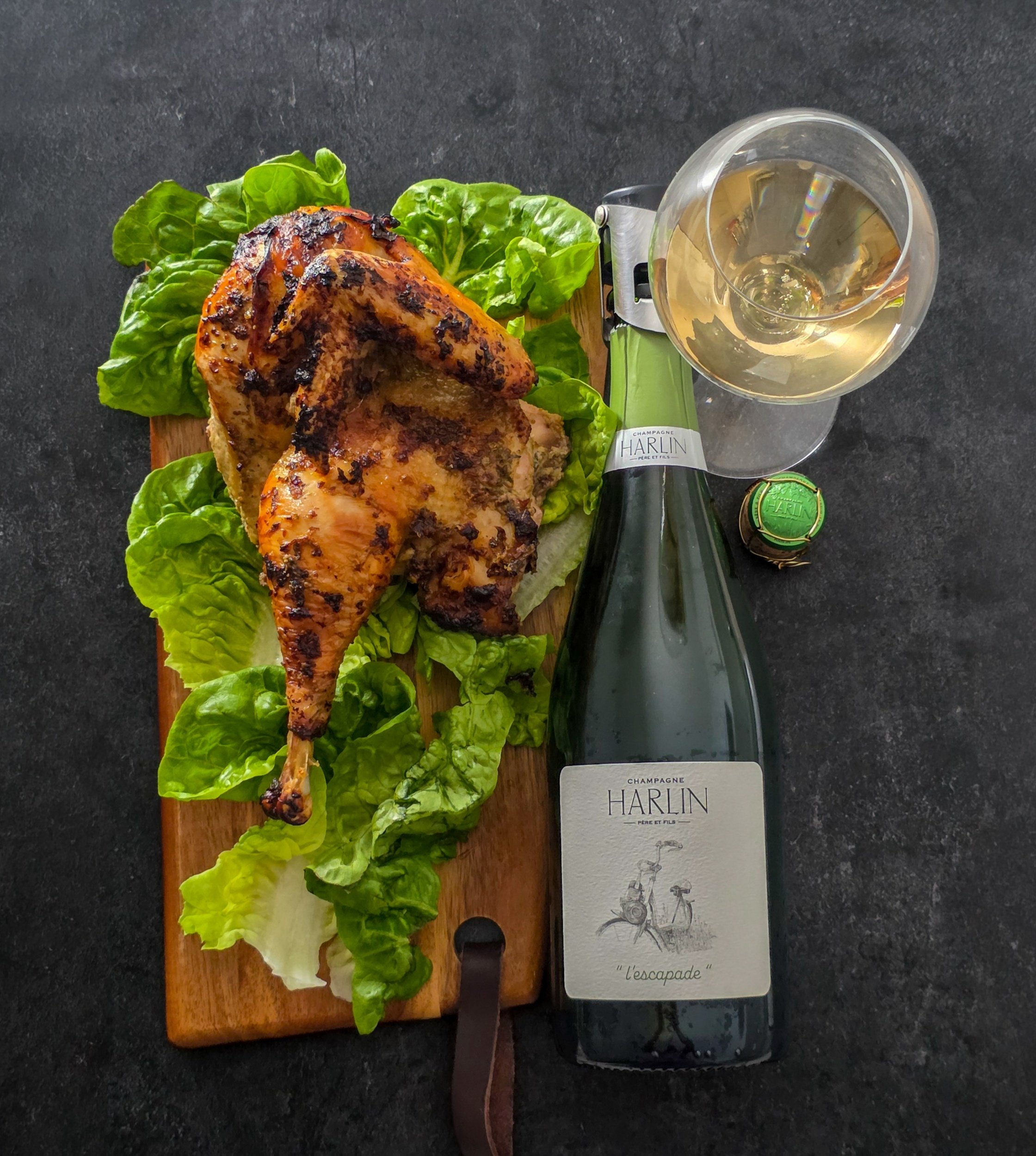
The star of the post: a roast half chicken on a bed of lettuce, with the Harlin Père & Fils L’Escapade I poured alongside it. The green cap on the slate is a small nod to the bottle.
“Three be the things I shall never attain: envy, content, and sufficient Champagne.” Dorothy Parker
Darlings, Champagne Day might be over, but I’m carrying the celebration into this week with a deeper dive. Why not celebrate every day? Cheers to life, and to making it to the following week.
After weeks of holiday prep, I decided I had earned a proper bottle, so I’m pouring Harlin Père et Fils “L’Escapade”. On Instagram I kept it short. Here is the long version: how I found grower Champagne, what is in the glass, and the dish I built to go with it, recipe included.
How I Fell for Grower Champagne
When I arrived in France in the mid-2000s, Champagne meant the big, famous brands. That was all I knew.
Then I went to the Salon des Vignerons Indépendants, a wine fair where independent producers present their own wines, and I discovered Récoltant-Manipulant Champagne. I had never tasted anything like it. I have loved the charm of these wines ever since.
Back then, grower Champagne was a niche, known to only a few Champagne nerds. I’m glad I discovered it when I did, and it’s a joy to watch these growers get the spotlight they deserve.
What Is Grower Champagne?
Grower Champagne is also called Champagne de Vigneron. Look for the initials RM on the label, short for Récoltant-Manipulant. It is a formal producer category: the grower cultivates their own vineyards and makes and sells Champagne from their own harvest. The category commonly associated with the big houses is négociant-manipulant (NM).
Many RM estates are family-run, working small parcels of vines in different villages and deciding for themselves how to bring them together. That includes reserve wines, the wines kept back from earlier harvests. Big houses typically rely on large reserves to keep a consistent house style from year to year. Many growers keep smaller stocks, so the character of the harvest shows more clearly in the glass. Not every grower works this way, and there is no single recipe.
Does RM on the label guarantee a great Champagne? Of course not. It tells you who made the wine, not how good it is. But it is a useful starting point for discovering the people behind the bottle.
The Producer and the Village
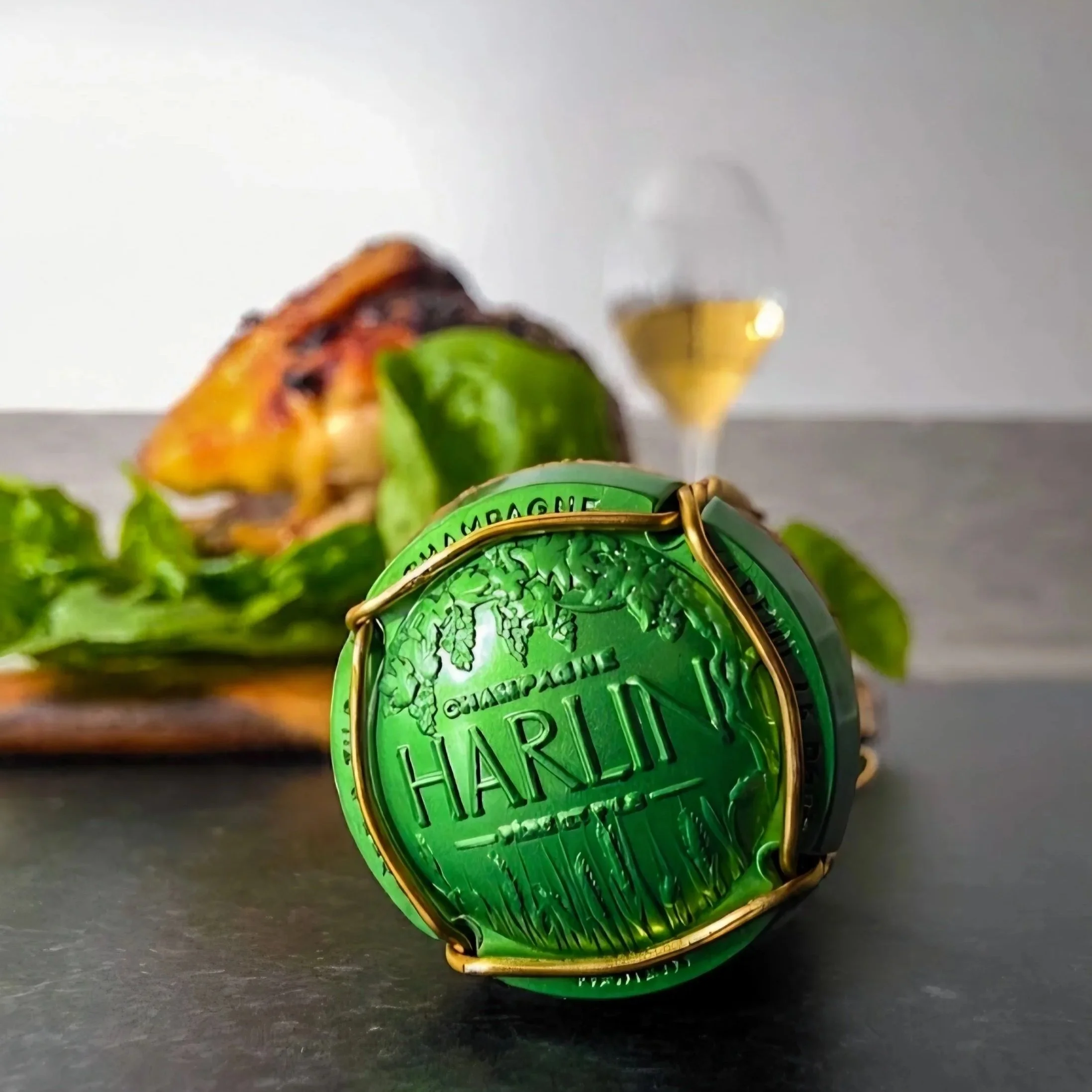
The producer’s name is embossed on the plaque de muselet, the metal disc beneath the wire cage. For me, it’s the signature of a grower.
Harlin Père et Fils is a family-run, organic and biodynamic estate in Mareuil-le-Port, in the Vallée de la Marne. The grapes for “L’Escapade” come from three villages: Tours-sur-Marne, Épernay and Mareuil-le-Port.
Meunier leads the blend at 45%, and that is what I love most about this bottle. It is often overshadowed by Pinot Noir and Chardonnay, yet it has a character of its own. It suits the Vallée de la Marne, and it is valued for its fruit, its generosity and the roundness it brings to a blend. It also buds later than Pinot Noir, which can make it less vulnerable to spring frost (though not immune).
The Wine at a Glance
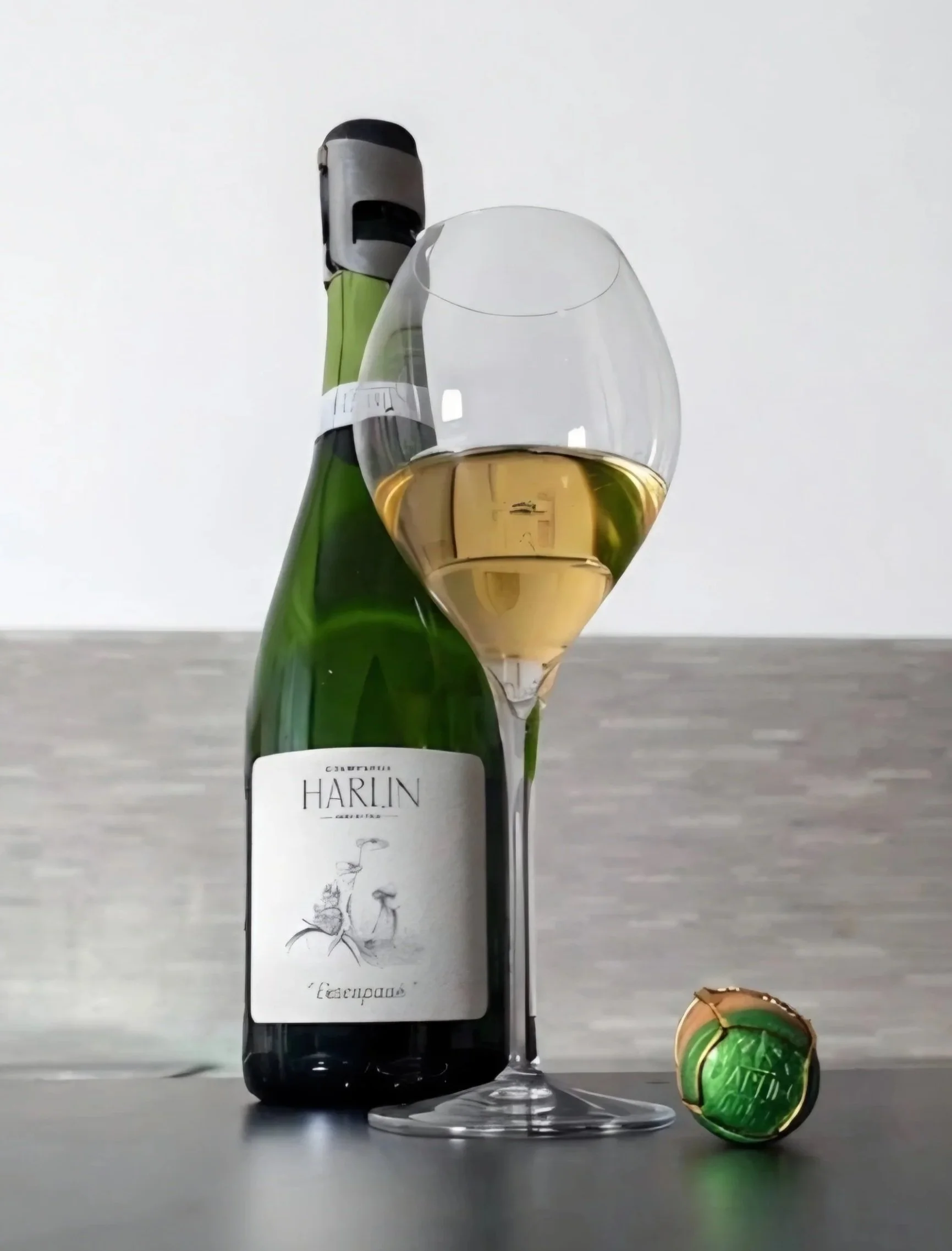
The wine itself: Harlin Père & Fils L’Escapade, an Extra Brut led by Meunier, golden in the glass.
🍾 Producer: Harlin Père et Fils, “L’Escapade”
🍇 Grapes: Meunier 45%, Pinot Noir 30%, Chardonnay 25%
🌍 Soils: sand 40%, chalk 40%, clay 20%
🥂 Harvests: 2023 (85%), 2022 (15%)
⏳ Vinification: malolactic fermentation, stainless steel tank 85%, oak barrel 15%
📅 Bottled: 16 May 2024
🍭 Dosage: 2.5 g/L, Extra Brut
What the numbers tell us:
Two harvests. 85% of the blend comes from 2023 and 15% from 2022. The 2023 harvest takes the lead, with 2022 adding another layer.
Soils. Chalk is often linked to freshness and tension, clay to body and generosity, and sand to softer edges. Soil alone doesn’t decide how a wine tastes, but these are useful starting points for thinking about terroir.
Vinification. Stainless steel (85%) preserves freshness and fruit, while the oak (15%) can add texture and complexity without necessarily making the wine taste oaky. Malolactic fermentation converts sharper malic acid into softer lactic acid, which rounds out the acidity.
Dosage. At 2.5 g/L this is Extra Brut, a category that runs up to 6 g/L. Dosage is the sugar added at the end of production. With so little, nothing softens the acidity, so citrus freshness and minerality take centre stage.
Tasting Notes
Appearance: Golden hue, fine and persistent bubbles.
Nose: Pronounced, with distinct minerality: slate, chalk, sea brine. Fresh lemon, green apple and lime zest, then fleur d’oranger and white peach. The autolytic notes of fresh dough, brioche and yeast come through, with hints of vanilla, smoke, grilled nuts, bitter almond and honey.
Palate: Bone dry, high acidity, medium (+) body. The mousse is fine and creamy, giving a full, rounded mouthfeel. The flavours mirror the nose: precise citrus, nutty autolytic depth, marked chalky minerality. Medium alcohol, balanced and refined.
Finish: Long, mineral, elegant. A Champagne that reflects precision and place.
The Pairing: Roast Chicken, Built From the Glass
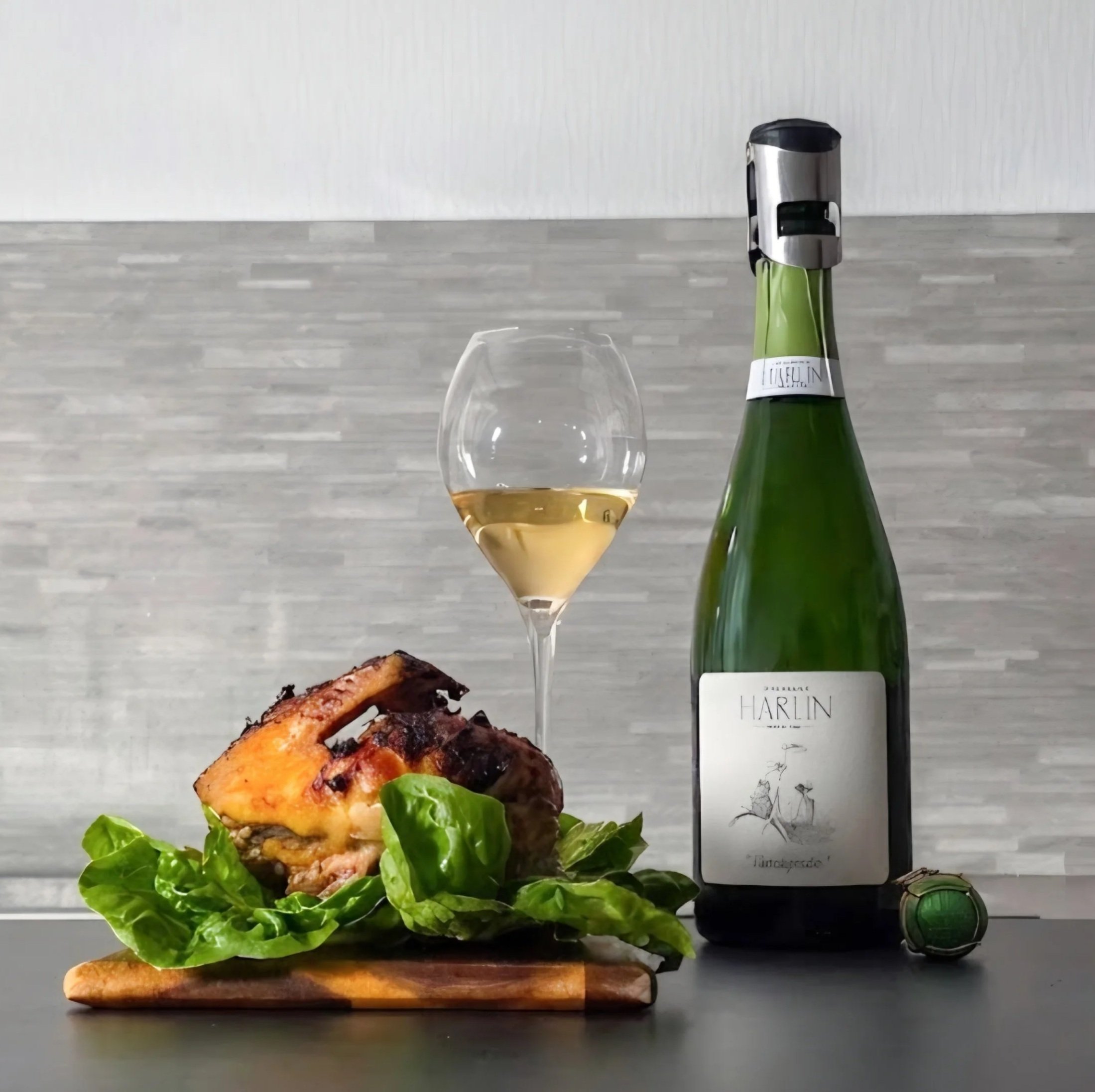
The whole table: golden roast chicken, a glass of L’Escapade and the bottle it came from. This is where acid meets fat.
Roast chicken is a classic partner for Champagne, and this bottle shows why. I build my dishes note by note from the wine, so I started with what is in the glass and worked backwards to the plate.
Lemon and lime zest in the glass meet lemon in the marinade and a squeeze of lime at the end.
Brioche, grilled nuts and smoke meet crisp, golden chicken skin.
The creamy mousse meets a thick yoghurt and coconut milk marinade that keeps the meat tender and rich.
Honey on the nose meets a spoonful of honey, not enough to sweeten the chicken, just enough to take the edge off an Extra Brut.
Chalky minerality meets cumin and coriander, the Kenyan side of the plate. Toasted lightly first, their warm, earthy, nutty aromas add depth and character, echo the grilled nuts in the glass, and give a cool, mineral wine something to play against.
High acidity cuts through the creamy coating and the richness of the skin, and resets your palate between bites.
I made the coating thick and creamy on purpose. The chicken marinates for up to 24 hours in yoghurt and coconut milk, which keeps the meat tender and moist, and gives this high-acid, mineral Champagne something rich to work against. Acid and fat are friends, and it is a classic pairing for a reason: the acidity cleanses the fat. Each sip resets your palate, so every bite tastes as fresh as the first.
Aromatic spice loves the same kind of wine. Cumin, coriander and pepper work beautifully with a citrus-driven, mineral, high-acid Champagne, because the acidity cleanses the palate between bites and balances the bold flavours. That makes each bite more delicious.
Tarragon is a French classic with chicken, and I used to cook with it all the time in France. Its gentle aniseed note adds a fresh, herbal lift next to the green apple and citrus in the glass. What a joy it was to see it available in Kenya too, even if most of it is grown for export. It’s time we kept some of it at home, to pair with our local Kenyan herbs. I also cook the chicken in avocado oil, because Kenya grows avocados in abundance. That makes this dish both Kenyan and French, and I love this mélange of cultures.
I left out chilli on purpose. This dish already has plenty of bold flavour: the spice, the fresh herbs, the creamy yoghurt and coconut milk, and the touch of honey. It is a savoury, creamy dish with a hint of sweetness, and what I want is balance. Heat can also make a dry, high-acid Champagne seem sharper, so I kept the wine in the spotlight.
The Recipe: Roast Half Chicken With Yoghurt, Coconut Milk and Tarragon
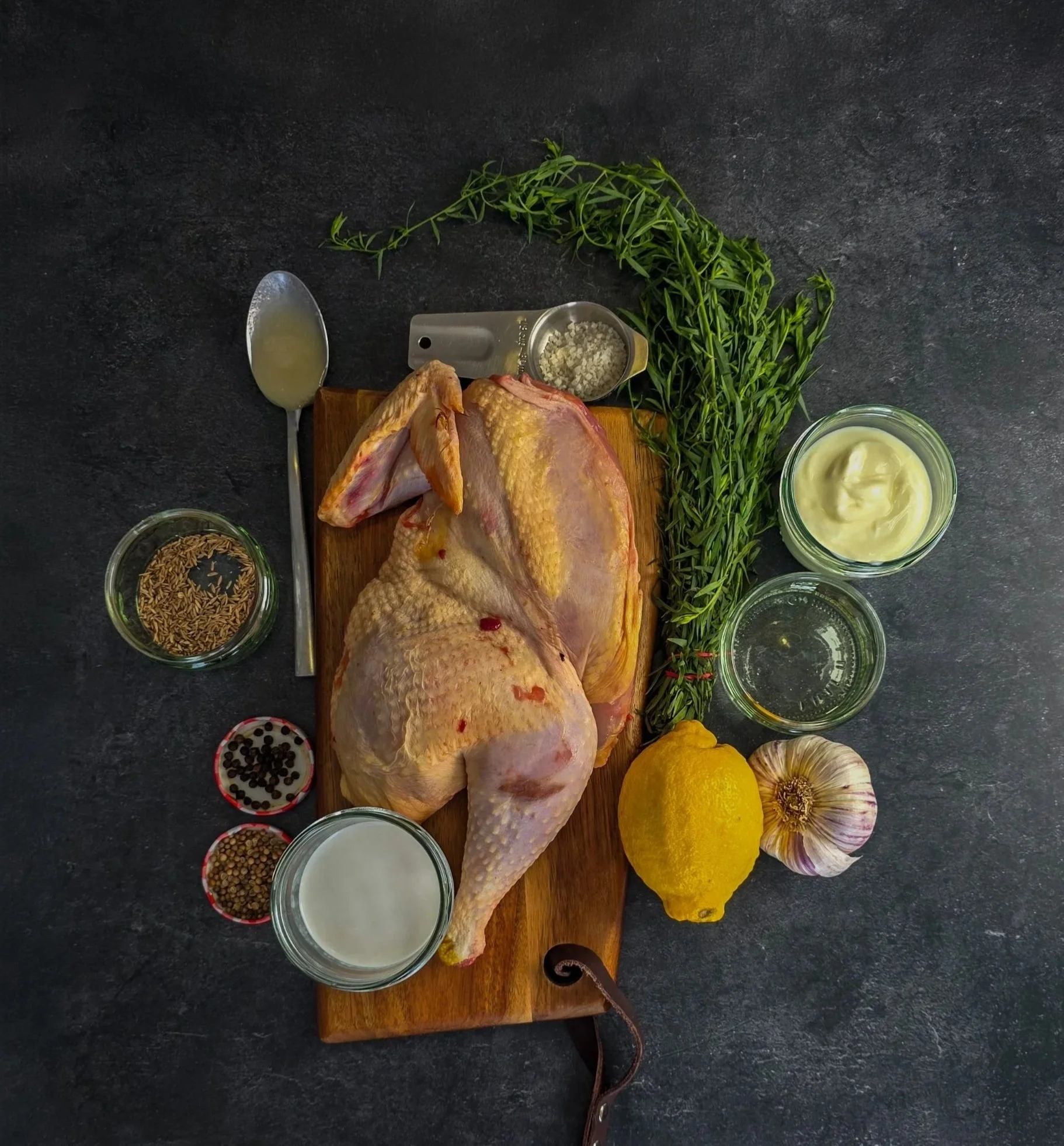
Everything you need for the recipe: half a chicken, tarragon, lemon, garlic, yoghurt, coconut milk and whole spices.
Serves 2. Prep 25 minutes, plus 8 to 24 hours marinating. Cook 30 to 40 minutes.
Written for half a chicken (about 820 g), bone-in and skin-on, with the backbone removed. Ask your butcher to halve it, or do it yourself with kitchen scissors. For a whole chicken, double the marinade and go by the thermometer.
For the chicken
1 half chicken (about 820 g), bone-in, skin-on
For the marinade
135 g thick plain yoghurt (Greek-style if you can)
90 ml full-fat coconut milk, stirred well
7 g garlic (1½ large cloves), crushed
30 ml avocado oil
4 g fresh tarragon, finely chopped (or 1.3 g dried)
10 g honey
2 g lemon zest (about 1 tsp), finely grated
4 g cumin seeds
4 g coriander seeds
2 g black peppercorns (about 1 tsp)
7 g fine salt
To finish
15 ml lime juice (about ½ lime)
10 g fresh dhania (cilantro), roughly chopped
Method
Toast the spices. Put the cumin seeds, coriander seeds and peppercorns in a dry pan over medium heat. Toast for 1 to 2 minutes, shaking the pan, until fragrant and a shade darker. Tip them onto a plate to cool, then crush in a mortar to a coarse powder.
Whisk the crushed spices with the yoghurt, coconut milk, garlic, avocado oil, tarragon, honey, lemon juice and salt in a bowl. It should be thick enough to cling to a spoon. If it runs off, stir in a spoonful of yoghurt. If it looks lumpy, loosen it with 1 tsp of coconut milk.
Score the thickest parts of the thigh and breast lightly. Lift the skin over the breast and thigh, and press most of the marinade directly onto the meat. Spread the rest into the cuts and over the chicken.
Cover and refrigerate for at least 8 hours. If you have time, 12 to 24 hours is even better. I marinated mine for 24.
Take the chicken out of the fridge 30 minutes before cooking. Heat the oven to 190°C (375°F) on a fan or convection setting (I use the Roast function on my countertop oven). In a conventional oven without a fan, use 210°C (410°F).
Wipe the excess marinade off the outside of the skin, so it can crisp and the honey doesn’t burn. Place the chicken skin side up in a roasting dish, or on a rack set over a tray.
Roast for 30 to 35 minutes in a fan oven, or 35 to 40 in a conventional one, until the thickest part of the thigh and the breast both reach at least 74°C (165°F). The thigh is happy up to about 80°C. If the top darkens too fast, cover loosely with foil. For a paler, juicier result, lower the oven to 180°C (350°F) and add a few more minutes.
Rest for 8 to 10 minutes. Squeeze over the lime and scatter the dhania.
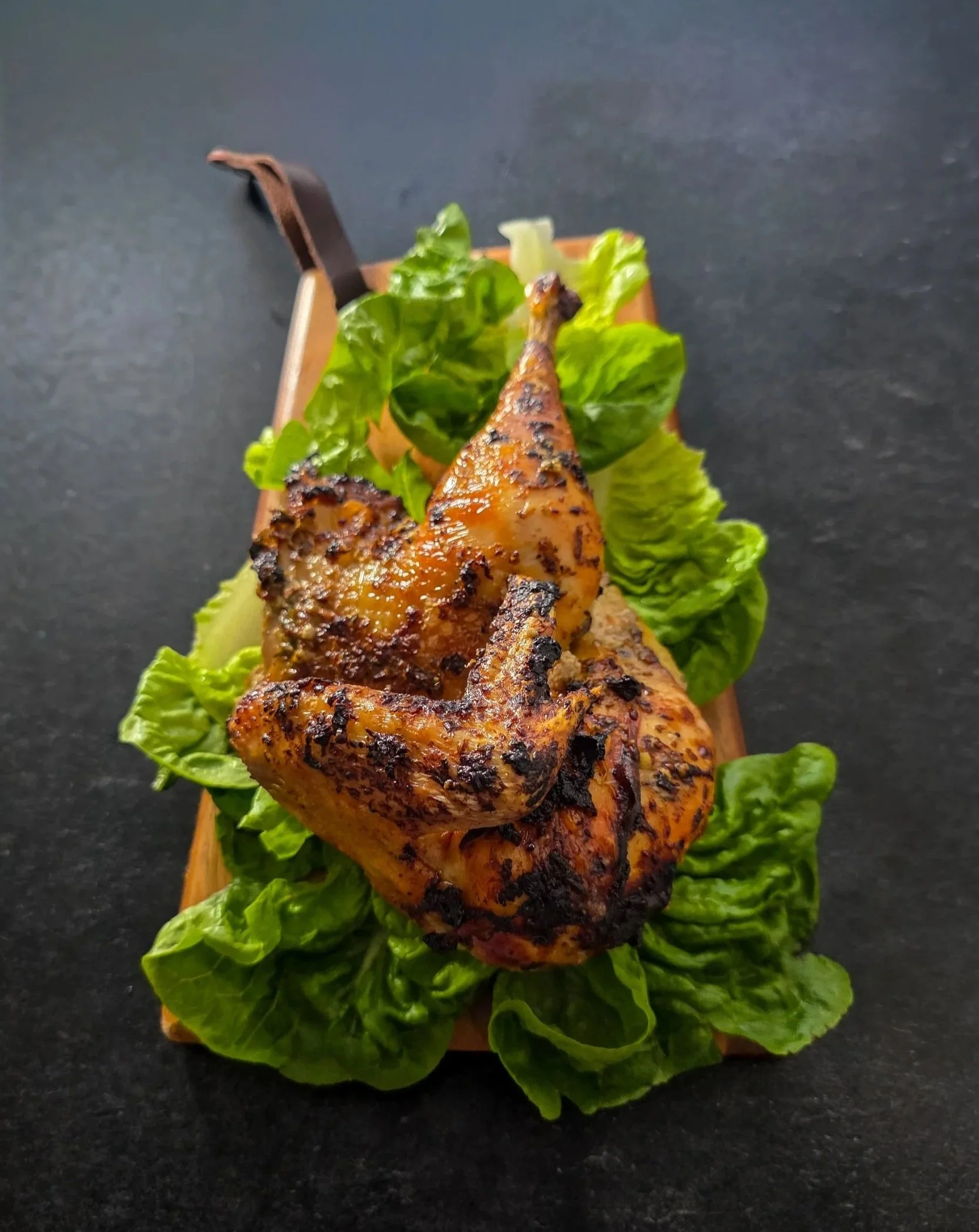
The finished dish: juicy inside, golden and spiced outside, served on fresh lettuce.
The result is juicy, moist and full of flavour. I served it on a bed of fresh lettuce, which adds crunch and freshness. A lettuce salad dressed with lemon, or grilled vegetables, work well alongside. Pour the Champagne well chilled. Taste the wine before and after a bite of chicken, and notice what happens to the acidity and the toasted notes.
Your Turn
On Friday I asked what you would pair with this Meunier-led Extra Brut, and your ideas were wonderful. Here are four I loved.
Nancy: a high/low pairing, Champagne with potato chips (or crisps, depending on where you are). The acidity and bubbles cut through the salt and the fat, which is the same logic as the chicken.
Anshula: lamb mince kebabs bound with ground chickpeas and fried in ghee. She describes the spice profile as soft but beckoning, and says deep-fried is even better. Fried food and bubbles are old friends, and soft spice sits well with a creamy mousse.
Renatinha: mushroom risotto with pork belly, “earthy and rich together”. The creamy risotto echoes the mousse, and the Champagne’s acidity cuts through the pork fat.
Natalie: seared scallops with fresh lemon zest and a touch of chilli. Scallops and Champagne are a classic match. I would keep the chilli very light, so it doesn’t sharpen the acidity.
Notice the common thread: salt, fat or richness on the plate, and acidity and bubbles in the glass. That is why this Champagne works as well with crisps as it does with a creamy roast chicken.
What would you serve with this Meunier-led Extra Brut? Would you stay close to one of these, or go somewhere unexpected? Tell me in the comments.
One Last Pour
Champagne doesn’t need to wait for a celebration, and neither does good food. If you’ve never tried a grower Champagne, start with a producer whose wines make you curious. Read the label, learn about the grapes, and taste what is in the glass.
If you make this roast chicken, tell me what you poured with it.
The celebration continues, Darlings. 🍾🥂