
From a historic exception in Champagne to eased grazing rules for Reblochon and Comté, France is testing how far a tradition can bend before it breaks.
📖 Read Time: Approx. 5 minutes.
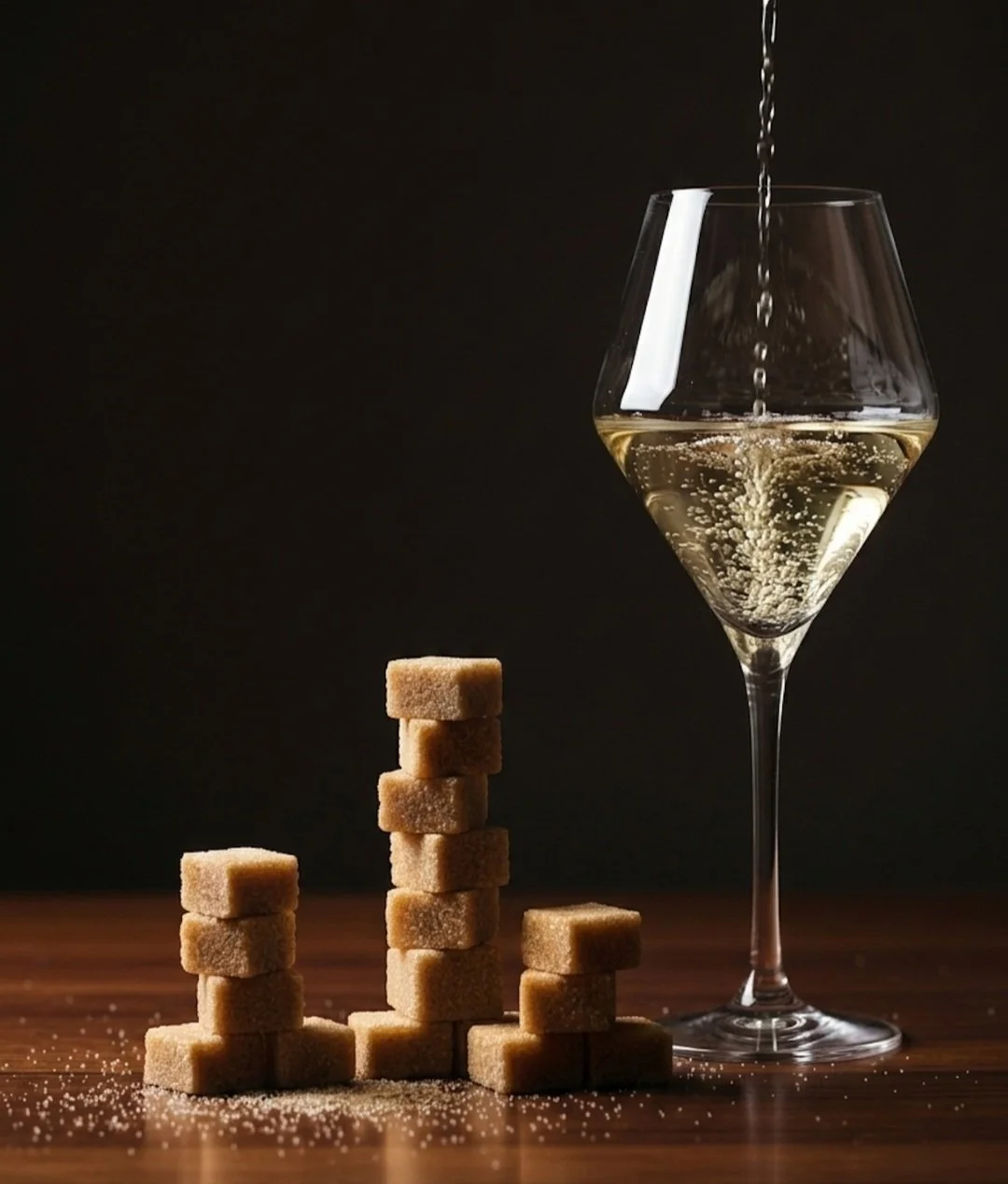
Sugar is the quiet architect behind every glass of Champagne, it's what a grape's ripeness turns into alcohol, and in 2026, an unusually hot growing season pushed that sugar further than the appellation's rules were built to handle.
Darlings, if you have ever paired a glass of Vin de Savoie with a wedge of Reblochon and thought "this is exactly how it should taste," hold onto that memory. It might not taste quite the same again.
This summer's heatwaves did something French appellation law was not built to handle easily. Grapes concentrated faster than usual, shrinking bunches and pushing sugar levels higher than growers have seen in years. In Champagne, where the finished wine is capped by law at 13% alcohol, that concentration became a real problem. One winemaker described it simply: the grapes just concentrated. There was no other way to say it.
Since we first wrote about this, the rule actually moved. On September 9, the INAO granted Champagne a temporary derogation allowing bottles from the 2026 harvest to reach up to 15% alcohol, the first time in the appellation's history that the 13% ceiling has been lifted.
Comité Champagne has been careful to frame it as an exception and not a new normal, describing the move as strictly temporary and limited to this single harvest. It is the result of a season the association itself calls one of the most unusual on record: severe spring frosts, an early flowering, and five separate heatwaves through the summer, culminating in the earliest harvest ever seen in the region, with picking underway by early August. Yields fell hard too, down to roughly 7,000 kilograms per hectare, around 30% below a normal year. The actual numbers at stake are smaller than the headline suggests.
A Comité Champagne spokeswoman said only a very small number of wines were on track to exceed the usual 13% limit, and only slightly, landing around 13.1% or 13.2%. Comité Champagne's own figures put the average post-harvest alcohol below 12%. Fifteen percent is not an arbitrary number either. It is the EU's legal ceiling for unenriched wine, so this derogation used up all the room the rule has left to give.
But the fact that the ceiling moved at all says something. As co-chair Maxime Toubart put it, a vintage like this one will likely become the norm within ten to fifteen years. You will not be able to buy any of it soon. Champagne needs at least fifteen months of ageing, so nothing from 2026 reaches shelves before 2028.
Why Sugar Is the Real Problem
There is a real winemaking mechanism behind why the rule had to move, and it goes beyond concentrated sugar. As sugar rises in a grape, natural acidity falls, and acidity is what gives Champagne its lift, its freshness, its ability to age for decades. Base wines already sitting on unusually high sugar were on track to cross 13% the moment they went through their second fermentation in the bottle, the very process that gives Champagne its bubbles. Without the exception, some of the finest lots from this harvest would have had to be declassified or discarded rather than bottled as Champagne at all. Raising the ceiling to 15% simply gave winemakers room to use what the vines had actually produced.
So what does this mean for what ends up in your glass? For most of us, very little. Non-vintage Champagne, the bottles most people actually drink, will keep tasting the way it always has, since houses blend in cooler reserve wines specifically to smooth out a hot year like this one. But a 2026 single-vintage bottling, whenever it eventually arrives, could taste noticeably different: richer, more vinous, built with very little dosage (think Extra Brut or Brut Nature) so there is still enough freshness left to carry the wine.
Champagne was not alone. Around forty appellations, from the Monts du Sancy to the onion of the Cévennes to Crémant d'Alsace, applied this year for temporary exemptions from their own rulebooks. An AOP exists to guarantee that a product tastes the way it always has, tied to a specific place, a specific method, a specific set of rules. Asking to bend those rules, even briefly, is not a small thing.
The Same Story, From the Pasture
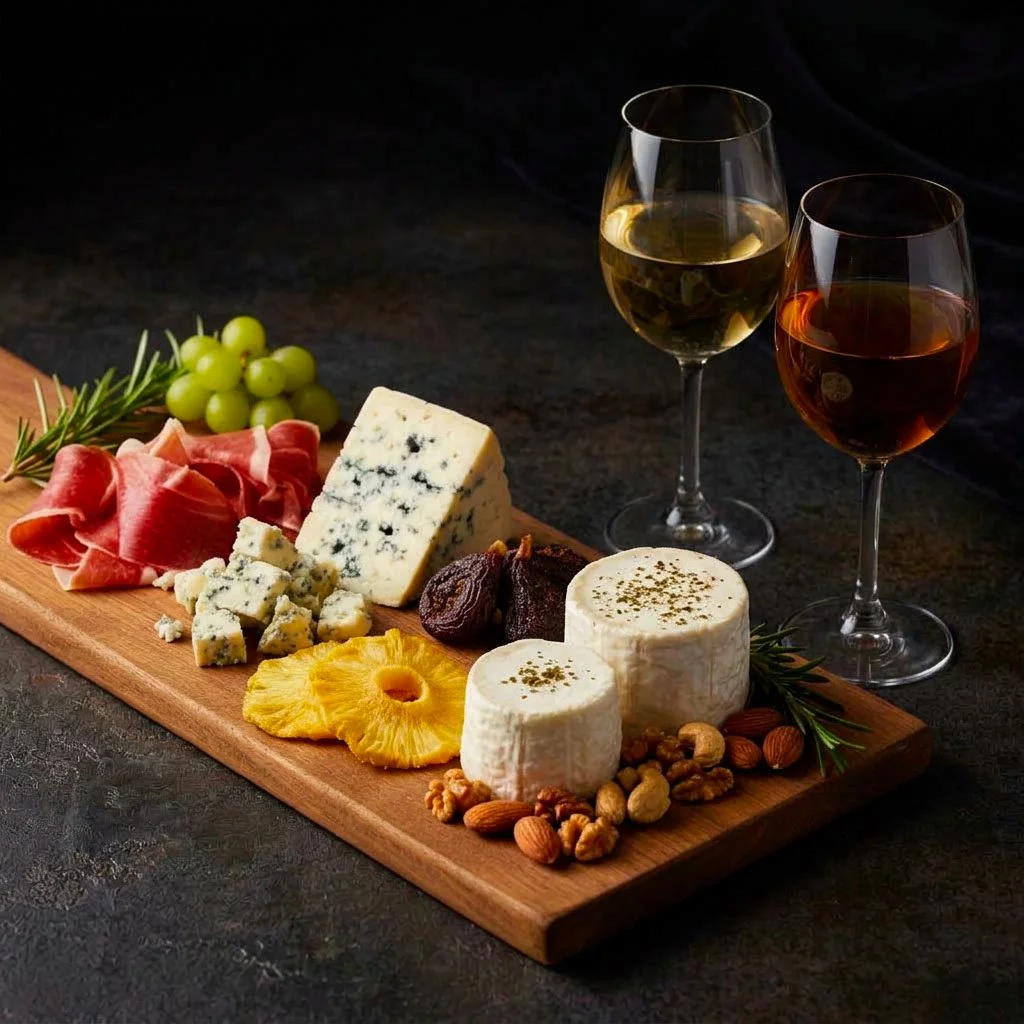
Wine and cheese have always adapted to each other at the table. This year, the adapting starts earlier, in the pasture and the vineyard, before either one ever reaches your board.
Cheese is caught in the same bind, from the other direction. Many AOP cheeses require that dairy cows graze on local pasture. This year's drought made that pasture disappear. Producers of Salers Tradition, an appellation built entirely around that grazing requirement, told reporters they could barely make any cheese at all this summer. One of them put it plainly: in a year, we will have a real problem with this product.
The government has already acted on several fronts. Comté, Beaufort, and Abondance, the great Jura and Alpine mountain cheeses, had their rules eased in late August. Reblochon, Cantal, and Fourme d'Ambert followed on September 1.
For Reblochon specifically, the minimum grazing period for summer 2026 dropped from 150 days to 120, and producers were allowed to let outside feed make up to a quarter of the herd's ration, rather than relying almost entirely on local grass.
Down in Corsica, Brocciu producers are asking for something similar, raising the outside-feed allowance from 30% to 50%, and it is genuinely dividing the industry: some see it as the only realistic option, others worry about how far an AOP can bend before the word stops meaning anything.
More applications are still working their way through the system, built on pasture growth data from local chambres d'agriculture and Météo France, sent up the chain because there simply was not enough grass to feed the herds.
What an Appellation Is Really Protecting
What strikes me most is not the heat itself. It is what these exemptions reveal about what an appellation actually protects. We tend to think of AOP status as a guarantee of unchanging tradition, a promise that a Comté or a Champagne will taste in 2026 exactly as it did in 1986. But a rulebook that cannot adapt at all is a rulebook that eventually breaks. The producers asking for these exemptions are not abandoning tradition. They are trying to keep making the product at all, under conditions the original rules never anticipated.
For those of us who work at the table, pairing wine with food, this matters beyond the headlines. A Reblochon made from cows that barely grazed will not taste the same as one made from a normal season of alpine pasture. A Vin de Savoie from a hotter, drier year will bring different sugar and acidity to that same plate. The pairing survives, but the specific dialogue between the two products, the thing we spend so much time chasing, shifts under our noses.
AOP products represent close to 30 billion euros a year in France. That is the economic story. The one I find more interesting is the quieter one: an entire system built on the idea that a place and a method can be frozen in law is now negotiating, appellation by appellation, with a climate that does not care about cahiers des charges.
The next time you order that Reblochon with a glass of something local, it might be worth asking your server what kind of summer the cows had.