
When Cabernet Sauvignon Stops Tasting Like Itself
Domaine de Cabrol Cabernet Blanc de Noir 2025 — a tasting, a producer story and a pairing built from the wine itself
📖 Read Time: Approx. 9 minutes.
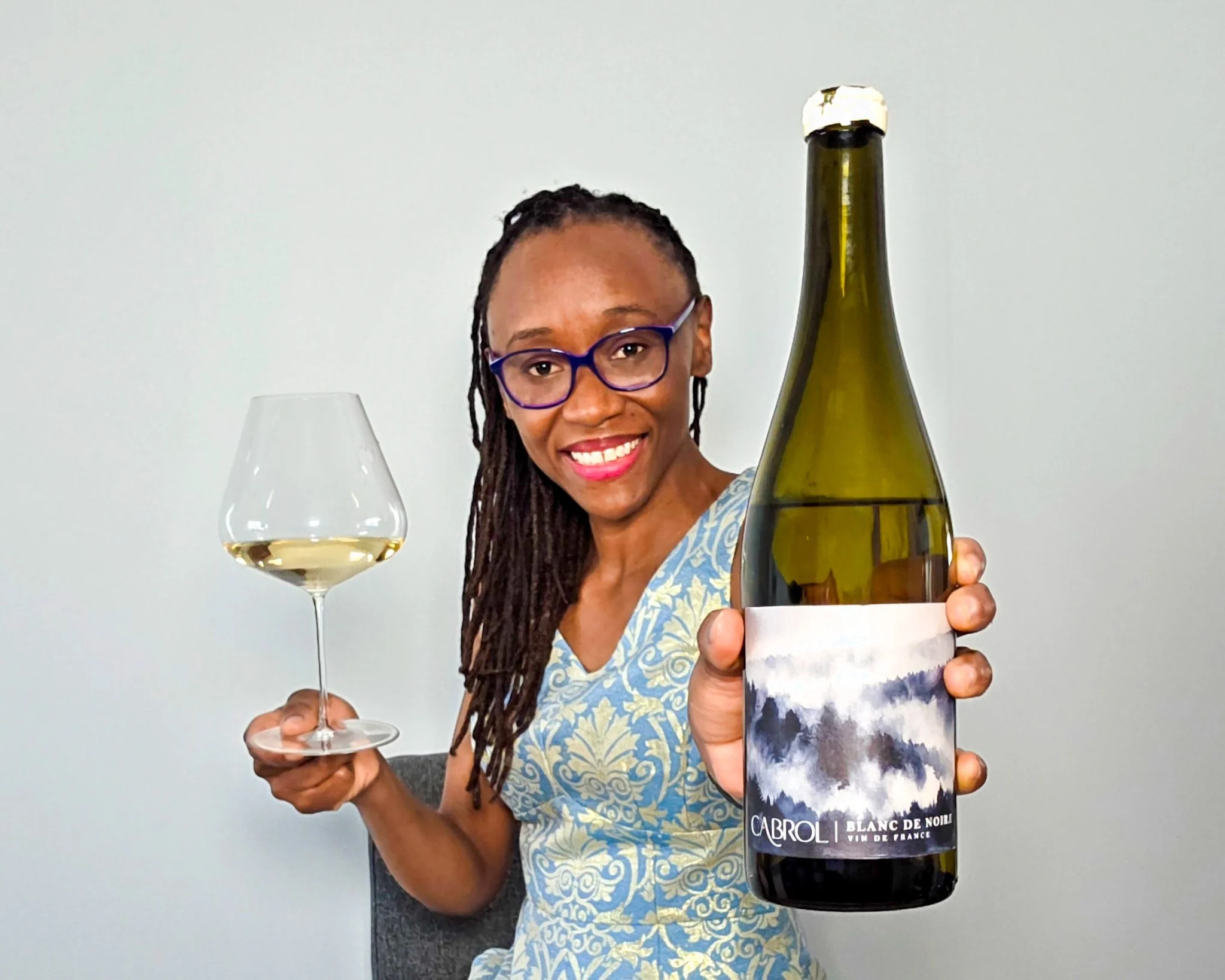
The reveal. Domaine de Cabrol Cabernet Blanc de Noir 2025 — the wine that stopped me completely.
In my previous piece I wrote about the rise of Blanc de Noir as a style — its history in Champagne, its growing presence in still wines across the world, and why it feels so precisely suited to the moment we are in.
This piece is different.
This is about one specific bottle that arrived on my table among six samples, refused to fit into any familiar category, and spent three days quietly dismantling everything I thought I knew about Cabernet Sauvignon.
This is about Domaine de Cabrol Cabernet Blanc de Noir 2025.
The Producer
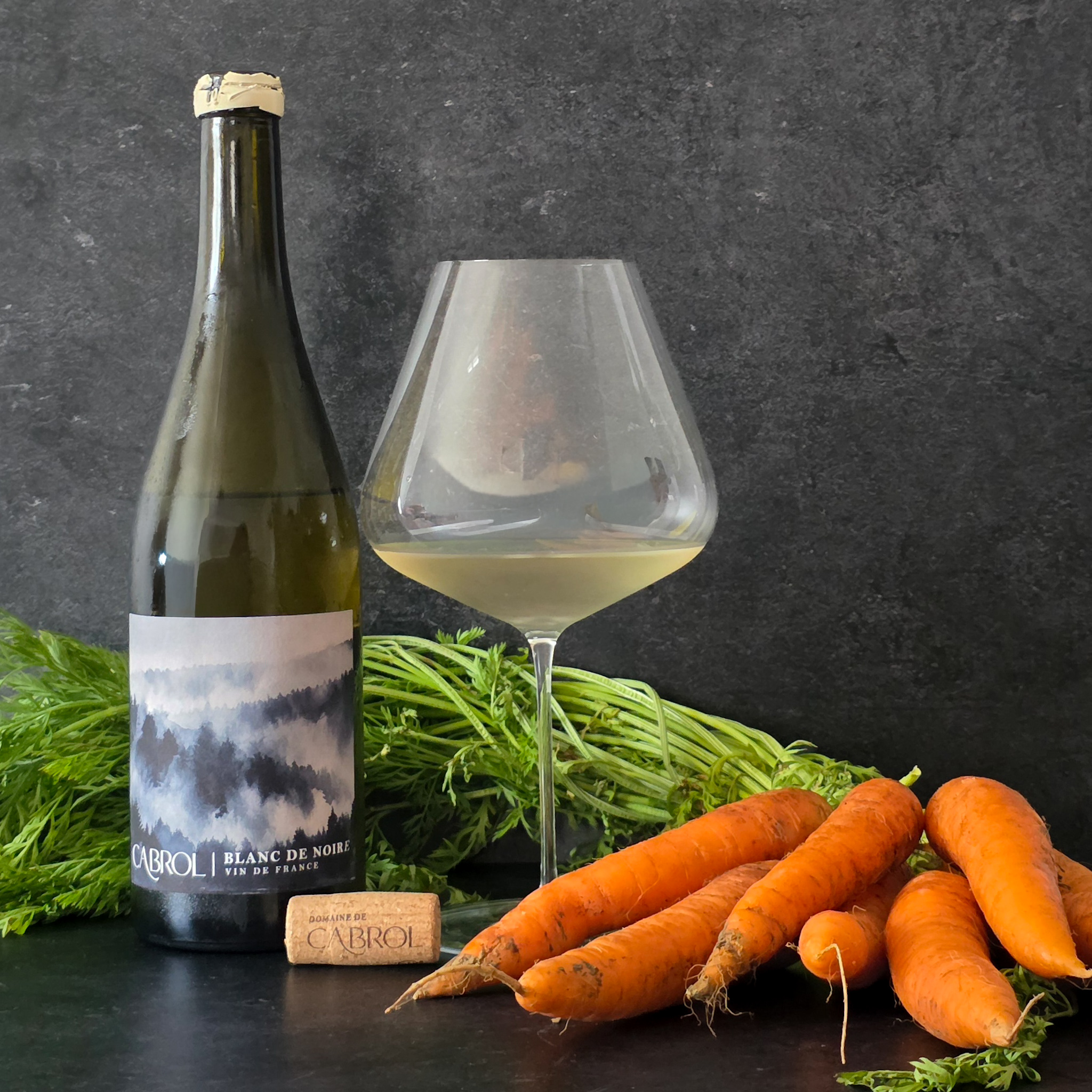
From the earth of the Montagne Noire to the table. Two expressions of terroir meeting in the same frame.
Domaine de Cabrol sits on the southern slopes of the Montagne Noire in the Languedoc, approximately twenty kilometres from Carcassonne. The estate has been in the same family for three generations, founded in the 1930s when René Carayol first developed the land for viticulture. Today it is run by Claude Carayol, who has been at the estate since 1987.
The numbers are deliberately modest. One hundred and twenty-five hectares of total land, of which only twenty-one are planted to vine. The rest is garrigue, holm oak, pine forest, olive trees, almond trees and wild thyme — a genuine haven of biodiversity that shapes the character of everything grown here.
The vineyards sit between 300 and 350 metres above sea level, at a fascinating geographical crossroads where Mediterranean and Atlantic climate influences meet and negotiate. The soils are limestone-rich and stony, and the estate produces its wines with low yields — typically between 20 and 30 hectolitres per hectare — with gravity-fed cellar work and a minimal intervention philosophy.
The Cabernet Blanc de Noir is classified as Vin de France rather than the estate's usual Cabardès appellation. This is not incidental. The Vin de France classification gave Claude Carayol the freedom to experiment without the constraints of appellation rules — to ask what Cabernet Sauvignon could become when the rulebook was set aside entirely.
The answer, as it turns out, is extraordinary.
In the Glass: Tasting Notes
Domaine de Cabrol Cabernet Blanc de Noir 2025 | Vin de France | Montagne Noire
The Eye
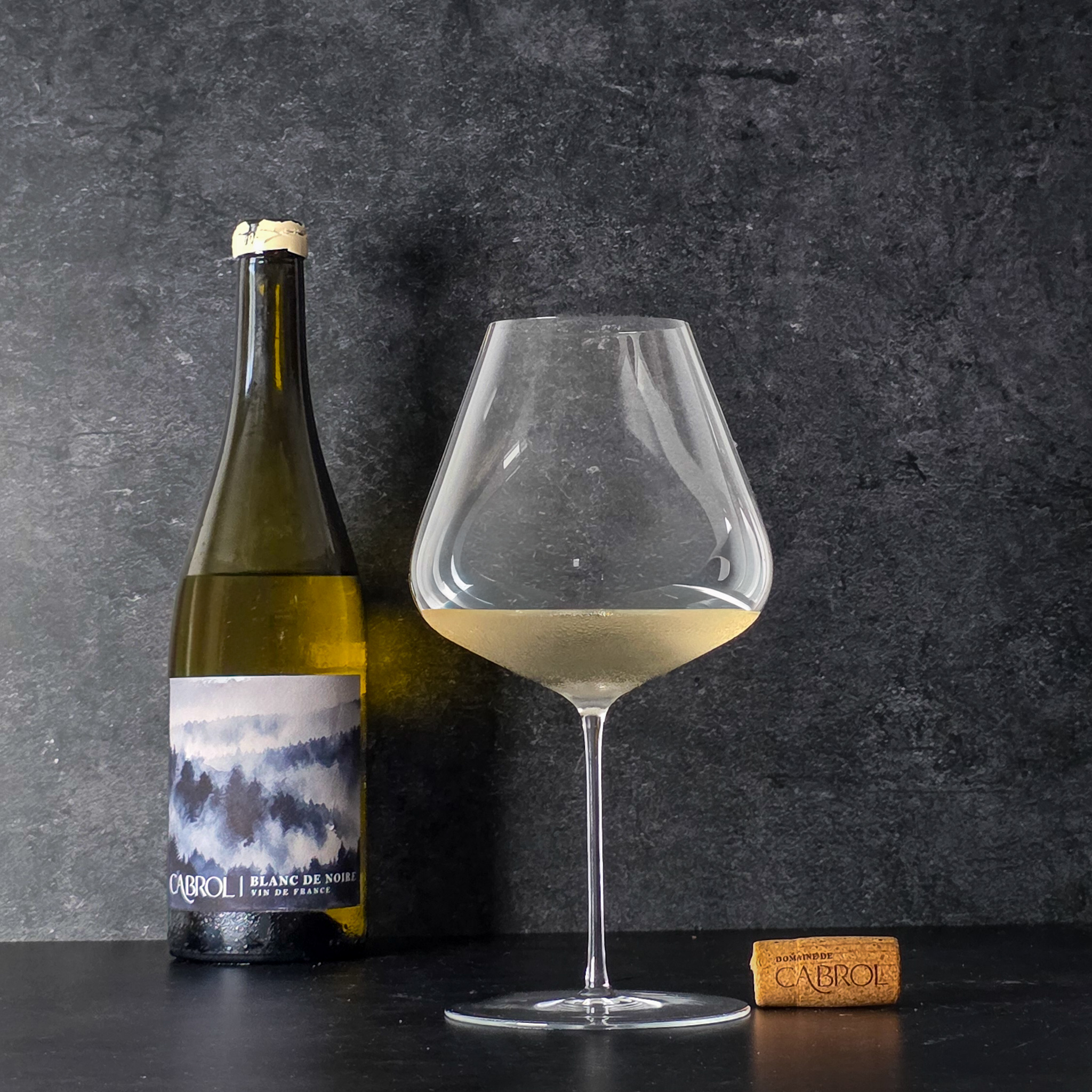
Pale gold with the faintest green tint at the rim. Nothing here suggests the Cabernet Sauvignon it came from.
Pale gold with the faintest green tint at the rim. Luminous and almost crystalline in the glass. Nothing here suggests the Cabernet Sauvignon it came from.
The Nose
The nose is immediate and intensely expressive — no hesitation, no apology. It arrives fully formed, energetic and precise.
The first impression is profoundly mineral. Wet stone, crushed chalk and cool slate create a sensation that feels almost tactile. As the wine opens, lavender emerges, weaving through the mineral core with remarkable elegance.
Soon after come layers of Mediterranean herbs — fresh sage, thyme, lime leaf and that unmistakable garrigue character that speaks of sun, scrubland and wild vegetation. The fruit profile is equally intriguing. Lemon, lime, grapefruit and nectarine appear in succession, accompanied by a subtle suggestion of red berry skin that seems to whisper rather than announce itself.
The Palate
Bone dry, driven by high, razor-sharp acidity that provides both energy and structure. At 14% alcohol there is undeniable weight and generosity, yet the balance is impeccable. The acidity lifts the wine, preventing any sense of heaviness and creating a profile that feels remarkably linear, focused and precise.
Citrus notes dominate the attack before giving way to herbal complexity and persistent minerality. Wet slate, chalk dust and a subtle saline edge run through the wine from beginning to end. A gentle herbal bitterness appears on the finish, adding definition and length rather than austerity.
The Finish
Long and remarkably persistent — lingering on lemon peel, dried thyme, sage and mineral freshness long after the glass is empty.
A Wine That Tastes More of Place Than Variety

A wine that speaks of landscape, being poured over a dish that speaks of earth.
What fascinated me most was not the quality of the wine, impressive though it is. It was the apparent disappearance of Cabernet Sauvignon itself.
Cabernet is one of the most recognisable grape varieties in the world. We expect blackcurrant, dark fruit, cedar and structure. Those familiar markers are almost entirely absent here. Instead the wine amplifies its environment. The limestone soils echo through its tension and freshness. The altitude contributes lift and vibrancy. The surrounding garrigue finds expression through its complex herbal profile.
Rather than speaking primarily of grape variety, this wine speaks of landscape.
And that is what I found so captivating. As wine professionals we spend years building sensory references — frameworks for understanding what is in the glass. Every now and then a wine arrives that quietly dismantles that framework. This was one of those wines. I spent three days revisiting it before I trusted my own conclusions.
A Cabernet Sauvignon that smells of wet stone, crushed chalk, lavender, thyme, sage, lemon and lime is not behaving as expected. It is doing something far more interesting. It is letting its terroir speak louder than its variety.
Bringing It to the Table: Spice Architecture

Ginger, garlic and coriander seed — a spice paste built note by note from the wine's own tasting profile. This is Spice Architecture.
When a wine speaks this clearly of its landscape, the most honest response at the table is to listen.
I did not want to pair this wine with something that would compete with or simply complement it in a conventional sense. I wanted to build a dish from the same language the wine was already speaking. To echo its vocabulary rather than answer it in a different tongue.
This is what I call Spice Architecture — the practice of building a dish note by note from a wine's tasting profile, so that the pairing feels less like a match and more like a conversation between two expressions of the same place.
The wine showed ginger warmth, coriander citrus, herbal complexity, mineral precision and a saline freshness. The dish needed to carry those same notes to the table.
The Recipe
Mulongo Wine & Spice — Pairing Recipe
Roasted Whole Carrots with Ginger, Garlic & Coriander Seed
For the Carrots
- Whole carrots, scrubbed and unpeeled640 g
- Extra virgin olive oil25 ml
- Fresh ginger, finely grated10 g
- Garlic clove, finely minced1 (5 g)
- Ground coriander seed4 g (1 tsp)
- Flaky sea salt5 g
- Freshly cracked black pepper2 g
For the Yoghurt Base
- Coconut yoghurt180 g
- Fresh lemon juice10 ml
- Fine sea saltSmall pinch
To Finish
- Fresh dill, roughly torn15 g
- Lemon, zest only1
- Toasted flaked almonds15 g
- Extra virgin olive oil, for drizzlingTo taste
- Flaky sea salt, to finishTo taste
Method
- 1 Prepare the carrots. Preheat the oven to 200°C fan. Scrub the carrots thoroughly under cold running water and pat completely dry. Leave them whole — the visual impact of a whole roasted carrot over yoghurt is part of the experience.
- 2 Season with intention. In a large bowl combine the olive oil, grated ginger, minced garlic, ground coriander seed, salt and pepper. Add the carrots and toss thoroughly until every surface is evenly coated. The spice paste needs to adhere properly to caramelise correctly during roasting.
- 3 Roast. Arrange the carrots in a single layer on a heavy roasting tray, leaving space between each one. Crowding causes steaming rather than caramelisation — you want deep amber edges and concentrated sweetness. Roast for 30 to 35 minutes, turning once halfway through. Allow to rest for 3 minutes after roasting.
- 4 Prepare the yoghurt base. Combine the coconut yoghurt with the lemon juice and a small pinch of fine salt. Spread generously across a serving platter, creating a rustic, uneven base — imperfection here is more beautiful than precision.
- 5 Finish and serve. Arrange the warm roasted carrots over the yoghurt. Scatter the fresh dill and toasted flaked almonds. Finish with lemon zest grated directly over the top, a final squeeze of lemon juice, a drizzle of good olive oil and a last pinch of flaky salt. Serve immediately — this dish does not wait well once plated.
Why carrots?
Whole roasted carrots have a natural sweetness that deepens under heat, an earthiness that speaks of soil and root, and a texture that holds up beautifully against both the wine's acidity and the richness of the yoghurt base. They are also visually spectacular when roasted whole with their tops still attached — a rustic elegance that suits the editorial spirit of this pairing entirely.
The spice paste — ginger, garlic and ground coriander seed — was built directly from the wine's tasting notes. Not chosen for conventional pairing logic, but because those three ingredients appear in the glass itself.
Why This Pairing Works
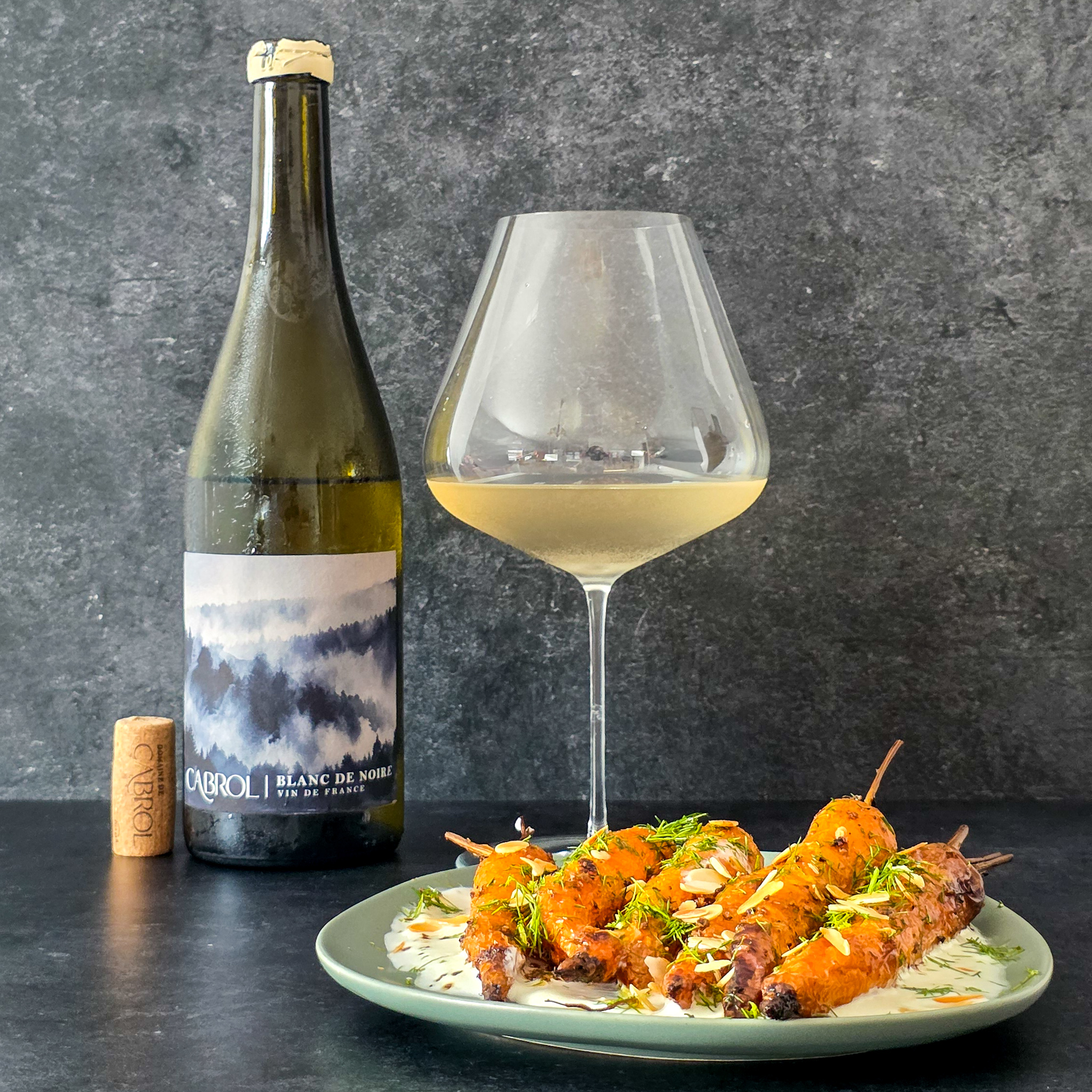
Roasted whole carrots with ginger, garlic and coriander seed over coconut yoghurt. A dish built from the wine's own tasting notes.
The wine's razor-sharp acidity cuts through the richness of the coconut yoghurt beautifully, preventing any sense of heaviness. The coriander seed in the spice paste echoes the citrus drive in the glass directly. The ginger warmth sits comfortably against the wine's generous 14% body without overwhelming its precision. The caramelised sweetness of the carrot gives the wine's acidity something to work against rather than dominate.
And the dill, lemon and almonds on the finish pull the dish and the wine into the same moment — bright, herbal, mineral and completely alive.
This is intentional pairing. Not matching for the sake of matching, but listening to what the wine is already saying and answering it honestly on the plate.
A Final Note
This wine arrived as one of six samples I was evaluating for a client. It left as something I will think about for a long time.
Not because it was the most complex wine I have tasted, or the most prestigious, or the most expensive. But because it surprised me completely. Because it reminded me, after years of study and thousands of glasses, that wine can still do that — arrive without warning and quietly dismantle everything you thought you knew.
Domaine de Cabrol Cabernet Blanc de Noir 2025 is not a wine that announces itself. It arrives quietly, builds slowly, and stays with you long after the glass is empty.
In a wine world that increasingly rewards the loud and the obvious, that feels like a genuinely rare quality.
A wine that speaks of landscape deserves a dish that speaks of earth. ✦
Mulongo Binti Simiyu is a DipWSET-certified wine consultant, educator and content creator based in Ariège, France. She runs Mulongo Wine & Spice, specialising in lesser-known regions, indigenous varieties and the intersection of wine education with bold, flavoursome food culture.
Full recipe also available on Instagram @mulongowineandspice
Discover more at mulongowineandspice.com