
The Sweet Wine Paradox: Why Are We Afraid of Sugar?
On fortified wine, controlled oxidation, and a 1985 Rivesaltes Ambré that refuses to apologise for itself
📖 Read Time: Approx. 6 minutes.
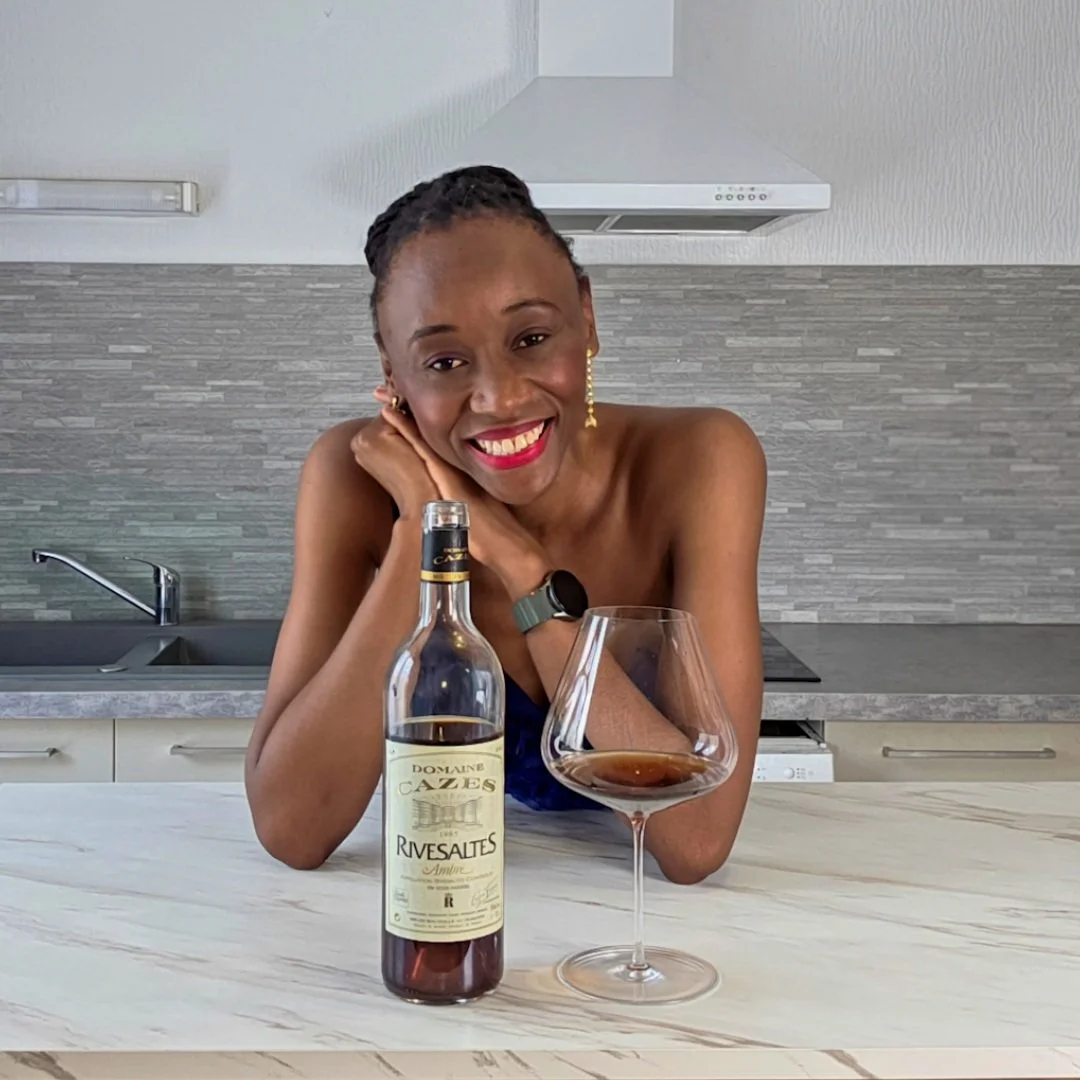
A quiet moment with a remarkable bottle. Forty-one years in the making, finally opened.
I was a student in Perpignan in the mid-2000s, a long way from the Kenyan coast, when I first encountered the wines that would quietly shape the next twenty years of my drinking life.
It happened almost by accident. Someone's grandmother, hearing that the Kenyan girl liked wine, pressed an old bottle into my hands — dusty, amber, no fanfare. "No one else will drink it," she said. "You take it. It makes me happy that someone will."
I didn't understand yet what I was holding. I poured a glass, and the smell stopped me completely. Dried apricot. Orange peel. Something warm and spiced and faintly like toasted nuts. It smelled, unmistakably, of home — of the dried fruit and warm spice of Kenyan kitchens, a comfort I hadn't realised I was missing until it arrived in a glass in the south of France.
That happened again. And again. Word got around among my friends that I loved these wines, and their grandparents delighted that someone young actually wanted them began gifting me bottles from their own cellars. Old vintages. "Grandma wine," some called it, half-joking, half-embarrassed on my behalf. I never understood the embarrassment. I was sipping liquid history, and it was extraordinary.
What struck me most, even then, was how affordable it all was. Wines with thirty, forty years of patient ageing behind them, sold for less than a bottle of mediocre supermarket red. I remember wondering, even as a student with no formal wine training yet, why nobody else seemed to want them.
Twenty two years and a WSET Diploma later, I still wonder the same thing.
Somewhere Along the Way, Sweet Became a Dirty Word
Modern wine culture has a strange relationship with sugar. Dry wine is serious. Sweet wine is for beginners, or dessert, or people who "don't really know wine yet." It's a hierarchy nobody quite admits to holding, but everybody seems to have absorbed.
It's also, frankly, nonsense.
Some of the most complex, age-worthy, and historically prestigious wines on the planet are sweet or fortified. Sauternes was once more expensive than the First Growths it shared a region with. Tokaji was the wine of emperors. Madeira survived sea voyages around the world and came back tasting better for it. And Rivesaltes — quietly, unfashionably has been doing something just as remarkable in the foothills of the Pyrénées for centuries.
I've been quietly collecting these wines for years. I rarely talk about that side of my cellar here. Today, that changes starting with what's in my glass right now.
What's Actually in the Glass
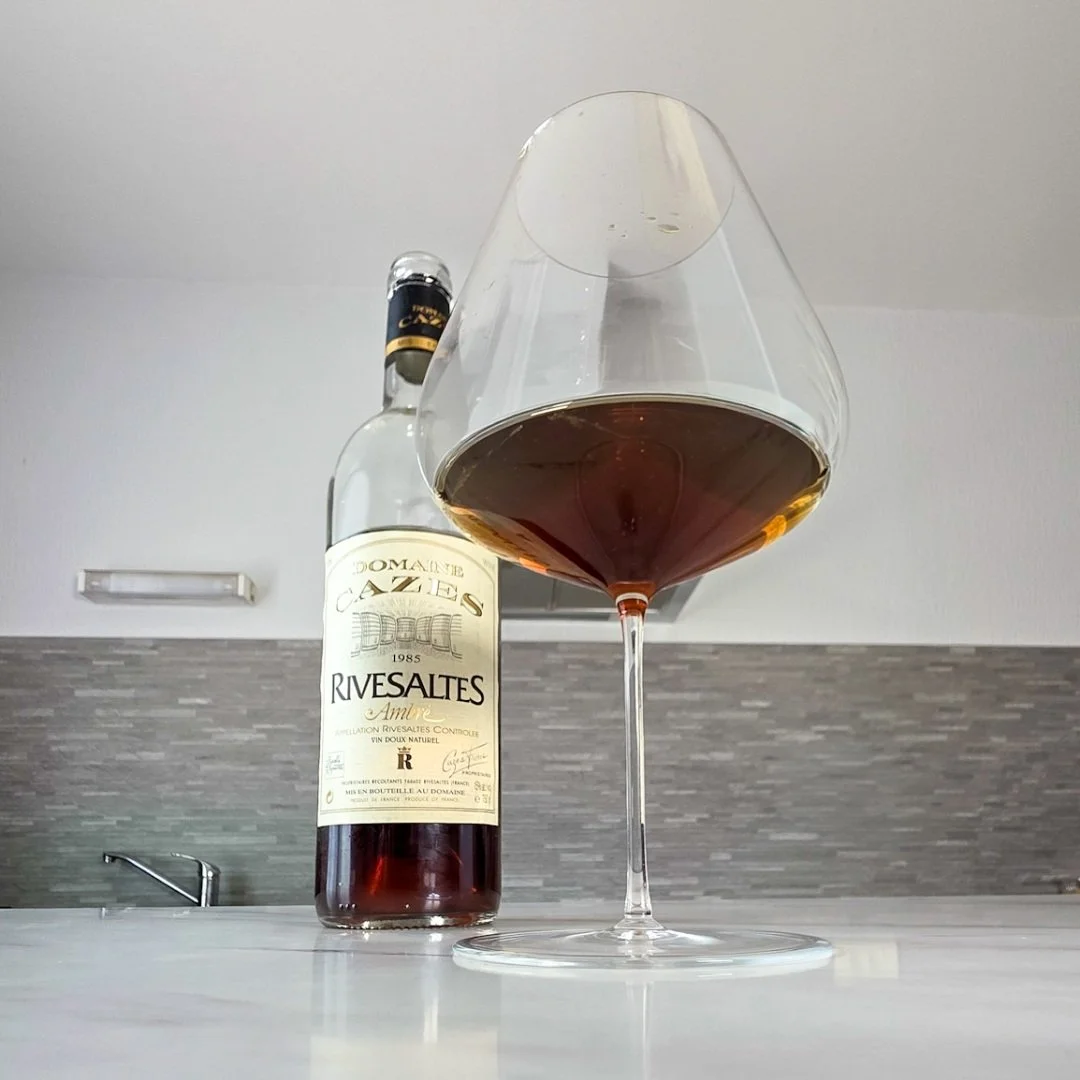
Deep amber gold in the glass. The colour alone tells forty-one years of oxidative ageing before a single sip is taken.
This is Rivesaltes Ambré 1985 from Domaine Cazes. A fortified Vin Doux Naturel from Roussillon, made from Grenache Blanc.
The process is deliberate and slow. After fermentation begins, the wine is fortified with grape spirit, which stops fermentation early and locks in natural sugar alongside a higher alcohol content. From there, it spends seven years ageing in centuries-old foudres. Then bottled in November 1992. Large wooden casks that lose roughly 7% of their contents to evaporation every single year. That's not a flaw in the process; it's the entire point. The wine concentrates, year after year, losing water and gaining intensity, while slow oxygen exposure through the wood develops a whole new register of flavour entirely separate from anything fresh fruit could offer.
Forty-one years on from harvest, what's left in my glass is a deep amber gold. The colour alone telling you everything about the road this wine has travelled.
Tasting Notes: A 41-Year-Old, Alive in the Glass
The Nose
Beautifully perfumed and upfront, with pronounced tertiary aromas of exceptional complexity. The first nose is immediate and arresting — burnt sugar, rich molasses, tobacco smoke, and a distinct rancio smokiness that announces its age without apology.
Then it opens. The fruit core emerges in layers: green lemon peel, orange marmalade, bitter lemon, bitter orange, dried apricot, sultanas, and unexpectedly, brilliantly — grilled pineapple. Underneath it all, a spice and nut architecture of toasted almonds, warm cloves, nutmeg, and sweet canella holds everything in place. Honeycomb threads through the whole composition like a quiet constant.
The Palate
Big, bold, and lushly sweet, yet masterfully balanced. The texture is rich, almost buttery, with a luxurious glycerol quality that coats the palate without heaviness. The high alcohol — 15% vol is seamlessly integrated, providing warmth rather than bite, the way a great fortified wine always should.
What surprises, however, is how strikingly lemony the palate becomes: vivid notes of lemon peel, bitter orange, and a distinct lemon meringue character dominate where the nose had promised dried fruit and spice. The complex tertiary notes carry through, but it is this bright, citrus-driven freshness that truly defines the experience in the mouth.
The Structural Magic
What actually allows a wine to survive four decades and still taste alive? Two things, working in tandem: high alcohol and high acidity. The alcohol is seamlessly integrated, warming from the inside out. And the acidity is bright, vibrant, almost electric — cutting cleanly through the luscious sweetness, keeping the entire palate refreshing rather than cloying. Together, these two elements are the architecture — the reason this wine has survived four decades and still feels, remarkably, utterly alive.
The Finish
Long. Hell, long. A highly persistent, savoury finish where bitter orange and lingering rancio notes continue to evolve long after the wine has left the palate. Complex, unhurried, and utterly unwilling to let you go. What more is there to yearn for, after this?
On Drinking It Too Soon
Sitting with this glass, I find myself genuinely wondering if I opened it too early. It's fascinatingly alive at 41 years old, and I have no doubt it would drink just as beautifully — perhaps even more beautifully — another ten to twenty years from now.
That's the thing about true quality. It doesn't fade. It evolves into something else entirely, and that evolution is the whole reward.
Pairing With Patience
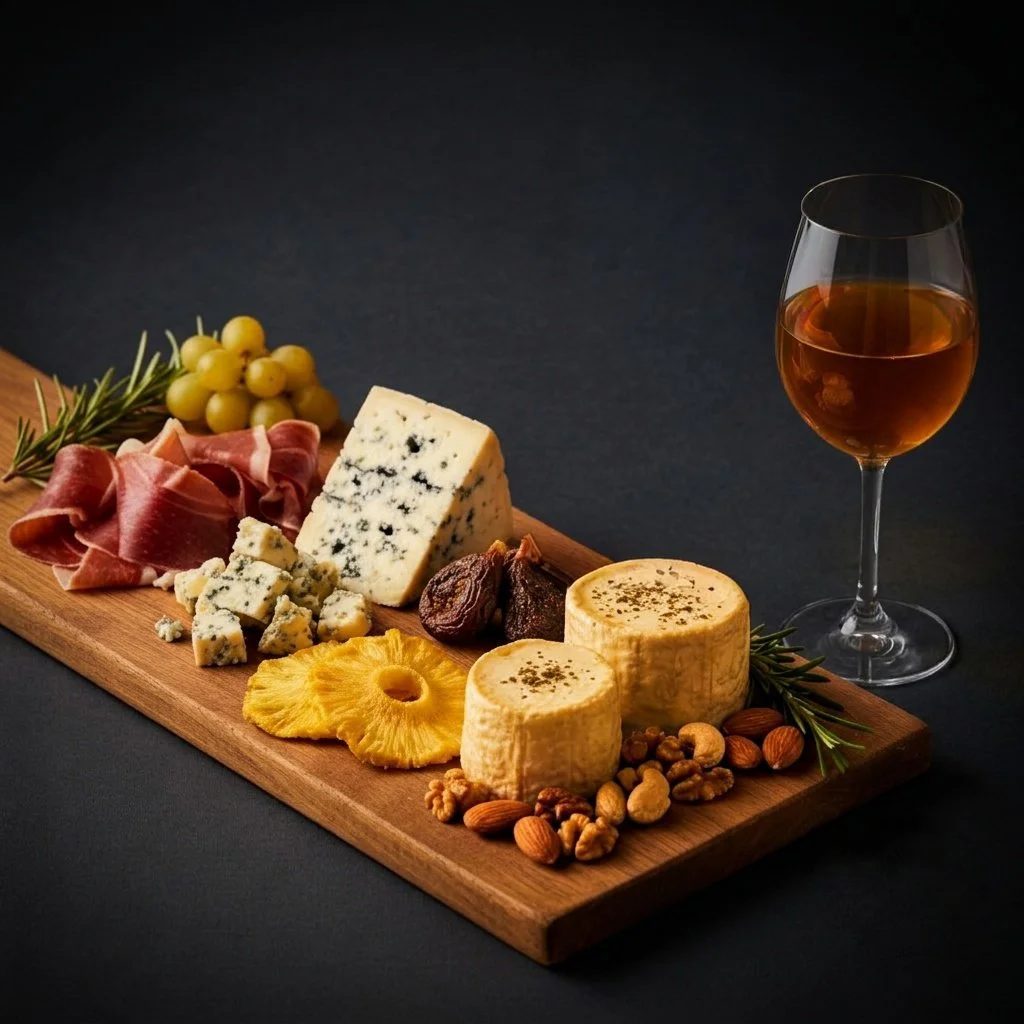
Rivesaltes Ambré pairs beautifully with aged and blue cheeses. The wine's rancio character and natural sweetness find their match in the saltiness and funk of a well-stocked board.
Wines like this reward thoughtful pairing rather than obvious ones. I served mine alongside a peach cobbler — warm, caramelised, with just enough acidity from the fruit to mirror the wine's own bright structure. The honey and dried apricot notes in the glass found an easy echo in the baked fruit, while the wine's gentle bitterness kept the whole pairing from tipping into excess.
The Kenyan in me, however, felt the need to push further. Grilled pineapple with chili and lime. Fruit caramelised over high heat, lifted with citrus, sharpened with a whisper of heat — found something remarkable in the glass. The wine's rancio character, that nutty oxidative edge, snapped into focus against the pineapple's brightness in a way that felt both instinctive and surprising.
A tropical fruit cake offers a similar logic, but requires a light hand. Not a dense, sugar-laden crumb — rather something fruit-forward and almost restrained: mango and fresh pineapple as the dominant note, passion fruit threaded through for acidity, coconut kept subtle, and dried lime peel folded into the batter to introduce the faint bitterness the wine needs as its counterpoint. Finished with toasted coconut and served just warm, it meets the Rivesaltes Ambré where it lives. In that quiet, complex space between sweetness and depth.
A few other directions worth exploring: aged hard cheeses, particularly something nutty like an aged Comté or a well-matured Beaufort; dark chocolate with a high cocoa percentage, which plays beautifully against the rancio character; or simply on its own, slightly chilled, as a contemplative pour at the end of a meal rather than alongside one.
Why We Still Underrate These Wines
I fail to understand why we still underrate these rare beauties.
Perhaps it's the sugar. Perhaps it's the unfashionable appellations, the lack of glossy marketing, the grandmotherly associations that made my own friends slightly embarrassed on my behalf all those years ago in Perpignan. Whatever the reason, it's a quiet injustice. These wines representing some of the most patient, complex winemaking in France, sitting overlooked while flashier categories take the spotlight.
I was lucky enough to fall in love with them before I knew enough to be told not to. Twenty years later, that instinct has only been proven right, glass after glass.