
From Slovenia to Languedoc — My Orange Wine Journey
Orange Wine Series — Full Feature
Passez à l'Orange
A rare Assyrtiko from Languedoc, a spiced mussel dish, and everything in between
The Wine That Was Never Meant to Exist
📖 Read Time: Approx. 8 minutes
Introduction
Darlings, my love affair with orange wine started long before it became fashionable.
It was the mid-2000s. I was travelling through Slovenia and Croatia, navigating wine lists I had never encountered before, in languages I couldn't read, in regions I barely knew. And then someone placed a glass in front of me. Amber, hazy, unlike anything I had ever seen poured from a white wine bottle.
I was impressed. And I was confused. Living in France, a country that considers itself the centre of the wine universe. I had never come across anything like this. These weren't on any menu I knew. These weren't in any cellar I had visited. They felt like a secret that Eastern Europe had been keeping for centuries.
That was my introduction to orange wine. And those early bottles, raw and wild as they sometimes were, planted something in me that never left.
The wines have come a long way since. Production methods, styles, and quality have improved dramatically. What was once niche and occasionally flawed is now being made with extraordinary precision by producers who understand the category deeply. I am proud to be an advocate for these wines, and prouder still to bring you this one.
“Orange wine is not precious. It's alive, it's versatile, and it is very much made for the table."
The Wine
Who knew they grew Assyrtiko in Languedoc?
This is my first encounter with Assyrtiko grown outside of Greece and I am fully, unashamedly impressed. Even better, I'm bringing it to you as an orange wine.
Vin de France as a category is having a moment, and rightly so. Producers are planting grape varieties outside their traditional regions, and with climate change pushing viticulture to adapt, a drought-resistant variety like Assyrtiko makes complete sense in the Languedoc. This bottle is proof of exactly that.
But the story of this particular wine begins with something even more interesting than geography.
Born from an accident
The winemakers' original intention was not to produce an orange wine but a classic white that would allow the Assyrtiko to express all its qualities. But the harvest yielded small, thick-skinned, tannin-rich berries with negligible yields. Just a few litres of juice from several hundred kilograms of fruit. Rather than force or fight nature, Olivier accepted what it was willing to give.
He macerated the skins with the juice for fifteen days, then aged the wine in old barrels. The result is a wine shaped by slow extraction and the quiet conversation between solid matter and liquid. A beautiful accident.
Tasting Notes
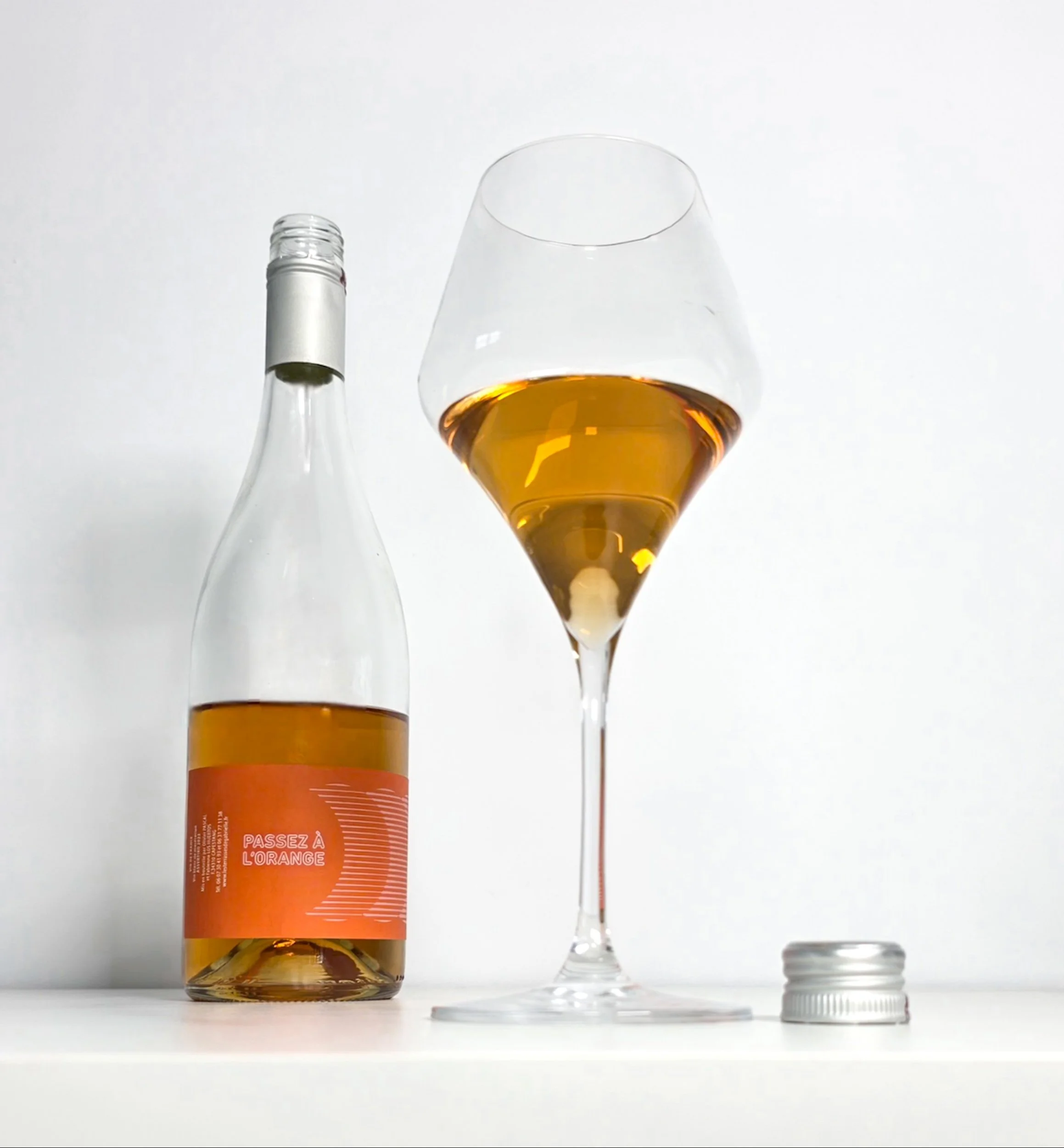
Passez à l'Orange — Assyrtiko 2023
Vin de France · Pascal Olivier & Fabienne Los Huertos
The Eye
Gorgeous medium salmon. Already telling you something different is in the glass.
The Nose
Pronounced mineral with flint and wet stones opening first. Then it blooms into green lemon, lime, preserved lemon, lemon thyme, dried rose petals, orange peel, beeswax, toast, hazelnut. It just keeps giving.
The Palate
Bone dry. High acidity. Medium body, medium-plus alcohol. Round and supple with the most elegant, low tannins. A delicious unexpected creaminess. And then — bitter notes of pamplemousse that whisper Pampelle (bitters made from Charentais grapefruit). A mineral bomb with an everlasting finish of citrus and dried bitter orange. The bitterness is beautifully integrated — adding texture, complexity, and depth.
Knowing this wine was never meant to exist , would you still taste it, darlings?
Give orange wine a second chance
Orange wine is a polarising topic, and that's exactly why it deserves a deeper conversation.
So what exactly is orange wine?
Orange wines — also called amber wines or skin-contact whites are white wines made like reds. Instead of filtering out the grape skins before fermentation, the juice is left to macerate with the skins and seeds. The result is a white wine with more body, structure, some tannins, and bright acidity. And of course, that signature amber hue.
This is not a new idea
Skin-contact winemaking has a long and deeply rooted history in Eastern European wine cultures. Georgia and Slovenia in particular have been doing this for centuries. What feels like a trend is actually a very old conversation. One I was lucky enough to stumble into in the mid-2000s on the Adriatic coast.
How To Choose
How to choose one that suits your palate
This is where most people go wrong — and why orange wine gets a bad reputation. The key is one simple question:
For how many days were the grapes in contact with the juice?
Your Entry Point — Novice
These short maceration styles are approachable, lighter in tannin, and far gentler on a palate that isn't yet calibrated to the style. Start here. Always.
Developing Complexity — Intermediate
The wine begins to develop further structure, more tannin, more of that distinctive orange wine character. Beautiful — but not where you start.
Full Depth — Expert
Layered, intense, and can genuinely overwhelm if you're not ready for it. If you know your way around a glass — go deep. Seek out the long macerations, the old amphorae, the natural producers pushing the boundaries. There is extraordinary complexity waiting here.
The Pairing
Show me your mussels
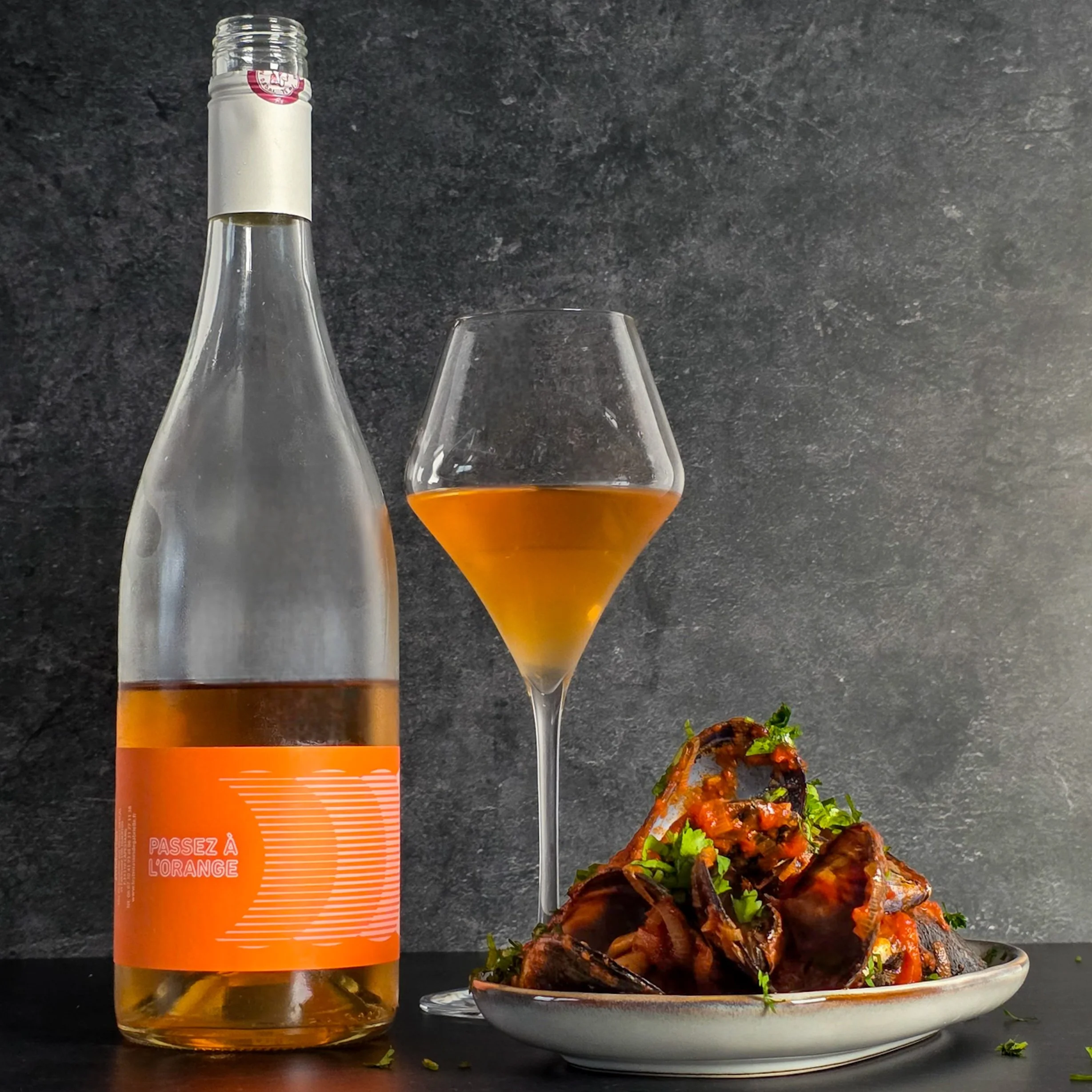
I'm closing this orange wine series the only way that makes sense, with food. Because if there's one thing I want you to take away from these past weeks, it's this: orange wine is not precious. It is very much made for the table.
This morning my mobile fishmonger swung by and settled the question I'd been carrying all week. Fresh Spanish mussels. That was all I needed.
Why This Works
An unexpected pairing — and that's exactly why it's interesting
The Assyrtiko orange wine and Spicy Tomato Spanish Mussels don't share an obvious connection. But pull them apart and every element has a counterpart.
Minerality
The Assyrtiko's flint, wet stone, coastal energy meets the natural brininess of the mussels on the same frequency. They speak the same language before anything else happens.
Acidity
The high acidity cuts cleanly through the butter finish and olive oil base, resetting the palate between every bite so the spice never overwhelms.
Bitterness
The bitter pamplemousse notes find a quiet counterpart in the smoked paprika and chili — adding texture rather than fighting the dish.
Creaminess
That unexpected palate creaminess — round, supple, low tannins — bridges the spiced tomato sauce with a softness that ties everything together beautifully.
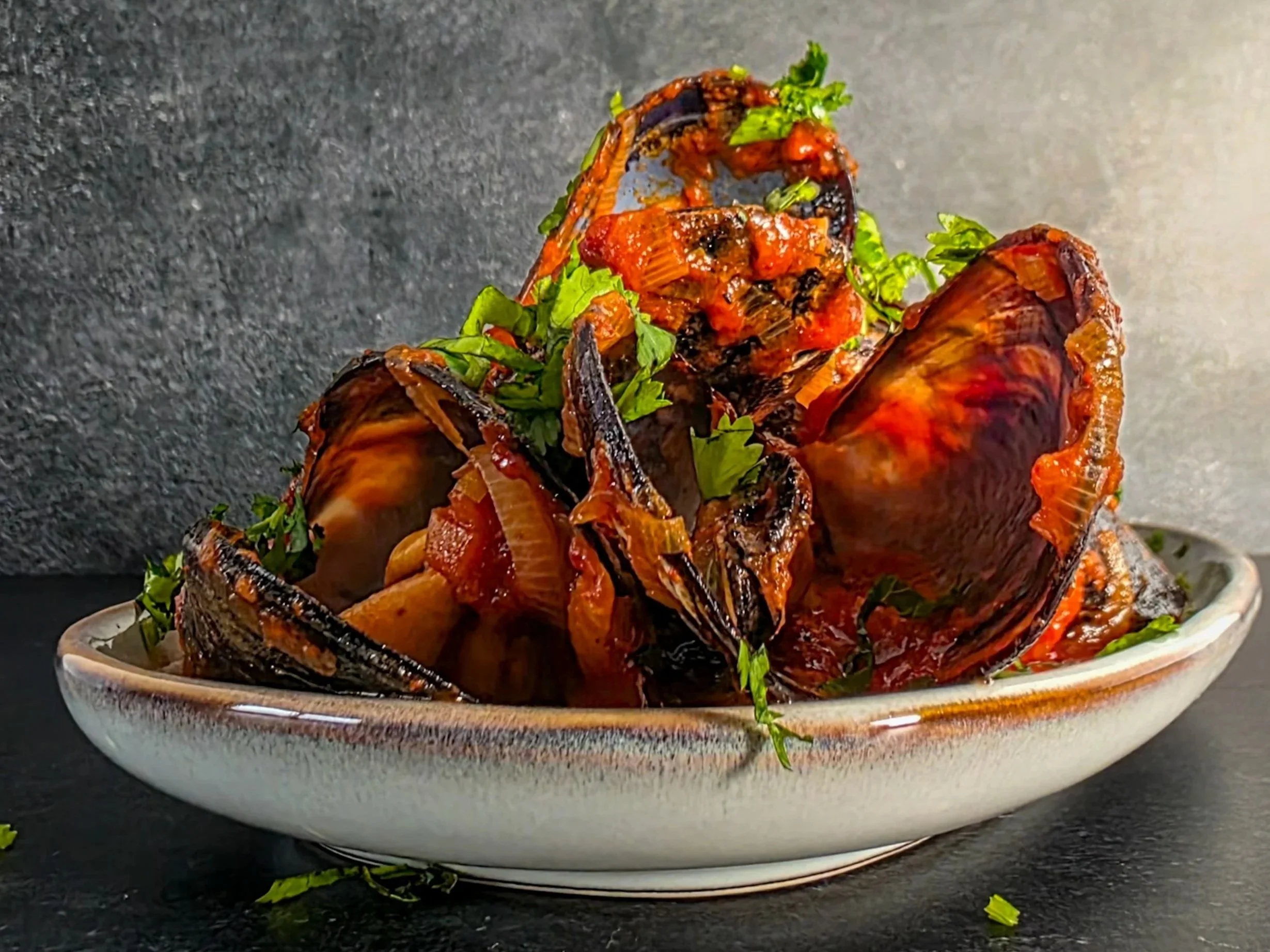
Mulongo Wine & Spice — Recipe
Tomato-Braised Spanish Mussels
Main
- Fresh mussels, cleaned & debearded887 g
- Olive oil30 ml
Aromatics
- Onion, finely chopped120 g
- Garlic, minced12 g
Spices
- Coriander seeds, lightly crushed3 g
- Chili flakes1–2 g
- Black pepper2 g
- Smoked paprika3 g
Sauce & Liquid
- Chopped tomatoes350 g
- Tomato paste15 g
- Dry white wine60 ml
To Finish
- Fresh coriander, chopped10–15 g
- Lemon or lime juice10 ml
- Butter (optional)10 g
Method
- 1 Heat olive oil over medium heat. Add onion and cook 5–6 minutes until soft and lightly golden.
- 2 Add garlic, coriander seeds, chili flakes, black pepper, and smoked paprika. Cook 1–2 minutes until fragrant.
- 3 Add tomato paste and cook 1 minute to remove the raw taste.
- 4 Deglaze with white wine and let reduce slightly, 1–2 minutes.
- 5 Add chopped tomatoes. Simmer 10–15 minutes until slightly thickened but still saucy.
- 6 Increase heat to medium-high. Add mussels, cover immediately and cook 5–7 minutes, shaking occasionally, until all mussels have opened.
- 7 Discard any unopened mussels. Finish with fresh coriander, citrus juice, and butter for silkiness.
- 8 Taste the sauce — no salt was added earlier. The mussel liquor provides natural salinity. Add only a tiny pinch if truly needed.
Orange wine is not precious, darlings. It was born in old cellars in Georgia and Slovenia, refined over centuries, and it has found its way — accidentally and beautifully — to a glass in your hand.
Highly recommended. For the curious, the adventurous, and anyone ready to go beyond the label. 🍊
Cheers, Mulongo Wine & Spice