
Mulongo's Pineapple Upside-Down Cake
A Spice Architecture dessert inspired by mature Rivesaltes Ambré.
📖 Read Time: Approx. 6 minutes.
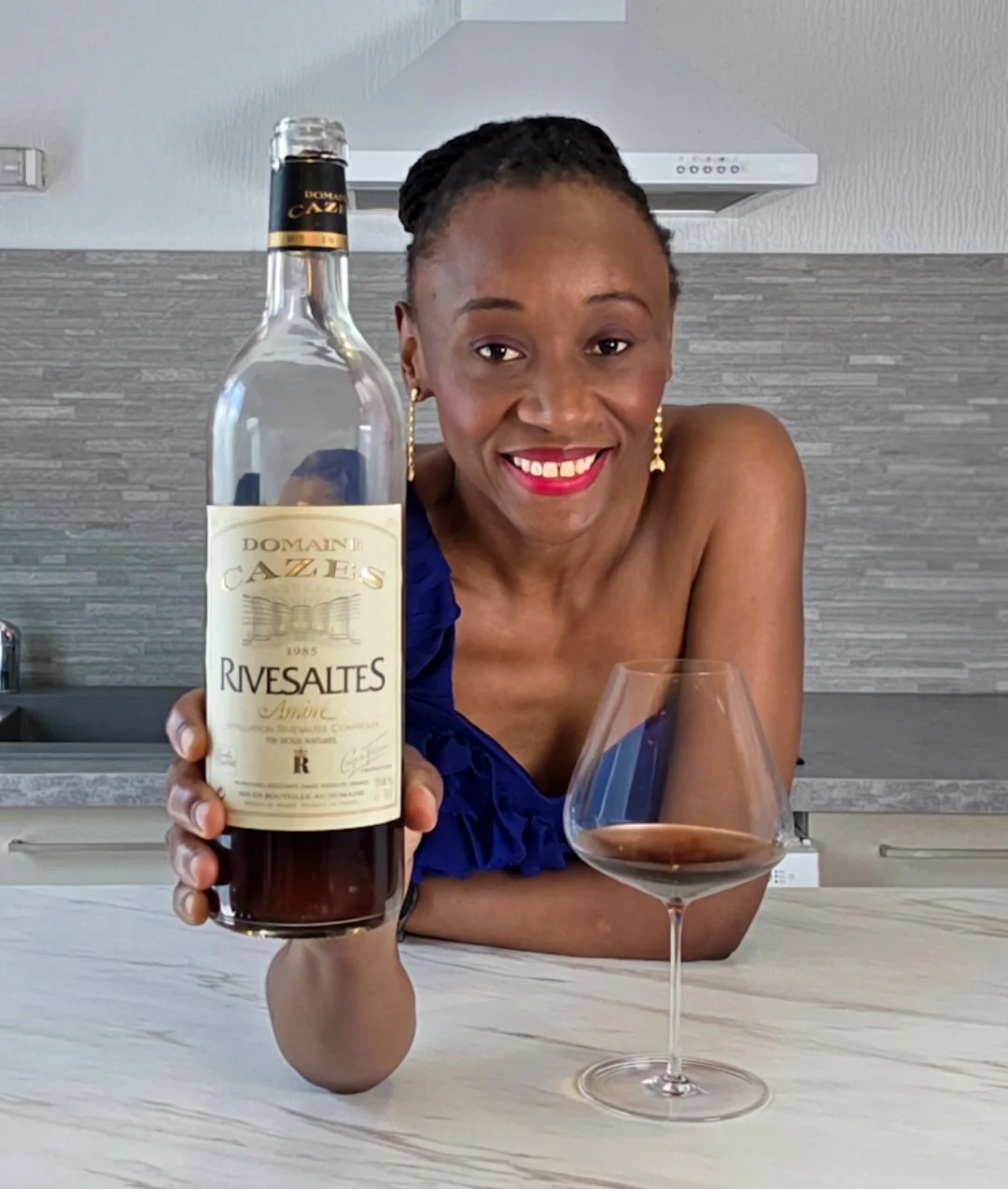
It began here with this bottle, this glass, and a quiet birthday evening. Before the recipe, before the baking, before anything else, there was the wine.
There are recipes you inherit.
There are recipes you develop.
And then there are recipes that seem to have been waiting patiently for a particular bottle to arrive.
This one began with a glass of 1985 Rivesaltes Ambré from Domaine Cazes, opened on a birthday evening in June.
As I tasted the wine, I wasn't thinking about dessert.
I was thinking about language.
Burnt sugar.
Orange marmalade.
Grilled pineapple.
Toasted almonds.
Nutmeg.
Rancio.
Each aroma felt like a sentence waiting to be answered.
So instead of asking,
"What should I bake?"
I found myself asking something different.
"What dessert already speaks this language?"
The answer was pineapple upside-down cake.
Not because pineapple appears loudly in the wine. It doesn't, but because somewhere beneath the layers of marmalade, caramel, citrus peel and oxidative complexity, a fleeting note of grilled pineapple quietly reveals itself. It isn't the dominant aroma. It is the bridge that connects everything else.
That is where this recipe begins.
A Childhood Memory, Revisited
Pineapple upside-down cake isn't a grand culinary memory for me.
It's a childhood one.
Growing up in Kenya, pineapple was never exotic. It was simply there—sweet, sharp and golden. Sold at roadside stalls, served at celebrations, and always finding its way into family kitchens.
I remember eating pineapple upside-down cake with a tall glass of chilled passion fruit juice. At the time, I didn't know why the pairing worked so beautifully. The juice simply made the cake taste brighter.
Years later, after studying wine, I realised the principle had never changed.
Sweetness needs freshness.
Richness needs lift.
Acidity keeps indulgence from becoming heaviness.
The passion fruit juice remains one of my favourite childhood memories.
Today, though, it has quietly stepped aside for something that follows the very same logic.
A lightly chilled glass of forty-one-year-old Rivesaltes Ambré.
Build From the Glass First
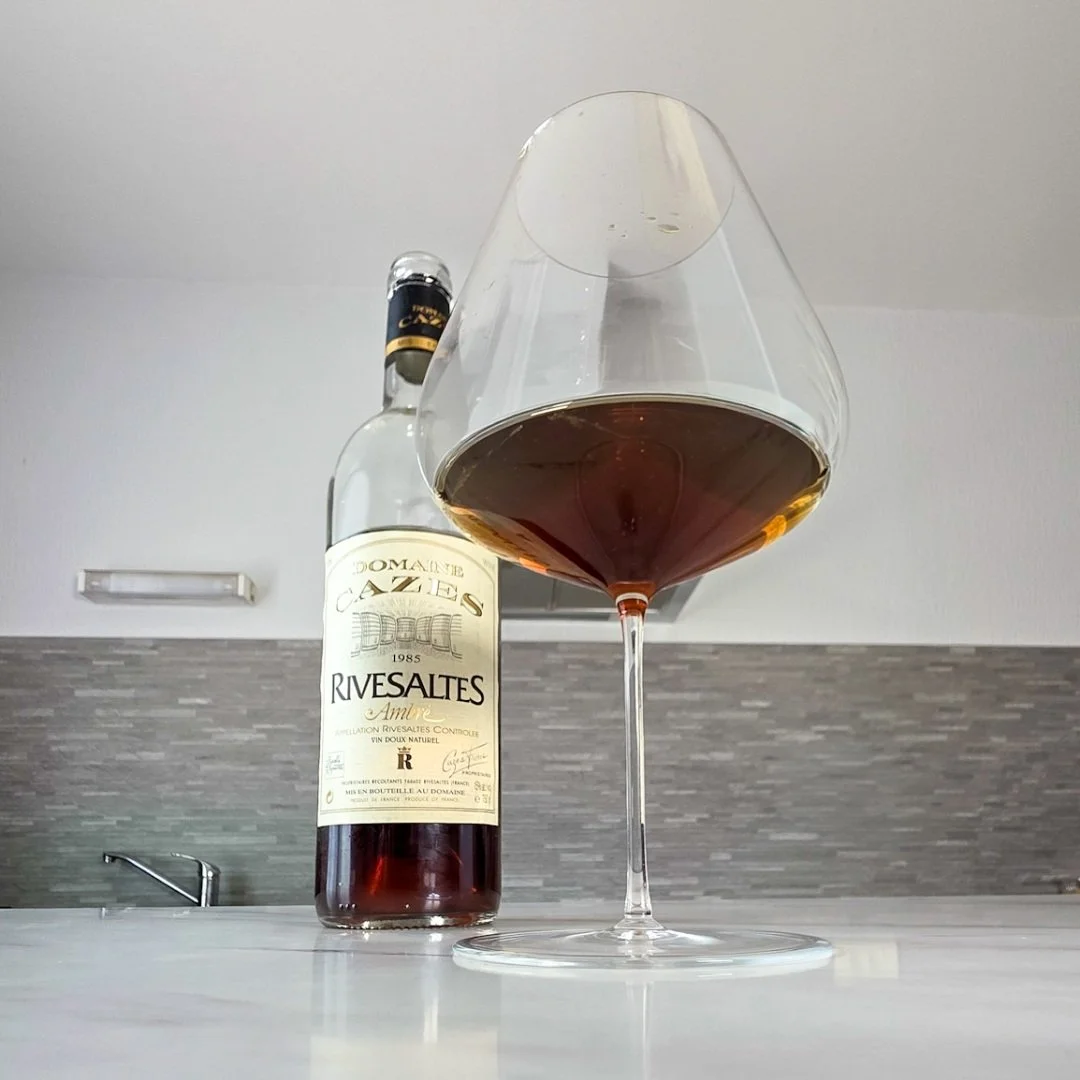
Deep amber gold in the glass. The colour alone tells forty-one years of oxidative ageing before a single sip is taken.
People often ask me how I approach food and wine pairing.
My answer is almost always the same.
I don't begin with the recipe.
I begin with the wine.
That philosophy sits at the heart of what I call Spice Architecture.
Rather than searching for a wine to accompany a finished dish, I start by reading the wine itself. Its aromas, structure, texture and rhythm and then build a recipe around those observations.
Before I measured flour.
Before I softened butter.
Before I sliced a single pineapple.
I returned to my tasting notes.
The wine offered:
burnt sugar
orange marmalade
dried apricot
grilled pineapple
toasted almonds
cloves
nutmeg
sweet canella
lemon peel
rancio
Those notes became the blueprint for the cake.
Reading the Wine
Caramelised pineapple
The pineapple topping mirrors the wine's subtle grilled tropical fruit note while developing deeper caramelisation during baking.
Brown sugar
The brown sugar echoes the burnt sugar, molasses and oxidative richness that define mature Rivesaltes Ambré.
Orange zest
A small amount of finely grated orange zest bridges the wine's marmalade and citrus peel character without making the cake overtly citrusy.
Fresh nutmeg
Freshly grated nutmeg quietly reinforces the evolved baking spices already present in the wine.
Sea salt
A small pinch of fine sea salt sharpens the caramel while allowing the wine's vibrant acidity to shine.
Notice what's missing.
There are no toasted almonds scattered over the finished cake.
Although almonds appear prominently in the wine, I deliberately left them out.
Not every tasting note needs to become an ingredient.
Sometimes restraint creates the more elegant pairing.
A Note from My Kitchen
I should confess something.
Despite writing recipes for a living, I forgot to invert the cocottes after the recommended ten minutes.
By then, the caramel had already begun to set — gluing each cake firmly to the bottom of its cocotte.
What should have been a clean, confident inversion became something closer to a negotiation. A knife around the edges. Some gentle persuasion. A little patience.
Eventually, all four came out.
The edges weren't perfectly neat. Some caramel stayed behind. But the cakes were exactly what they needed to be.
Warm.
Fragrant.
Honest.
Moments like these remind me that good cooking isn't about perfection. It's about understanding your ingredients well enough that even when things don't go entirely to plan, the food still brings joy.
The Pairing
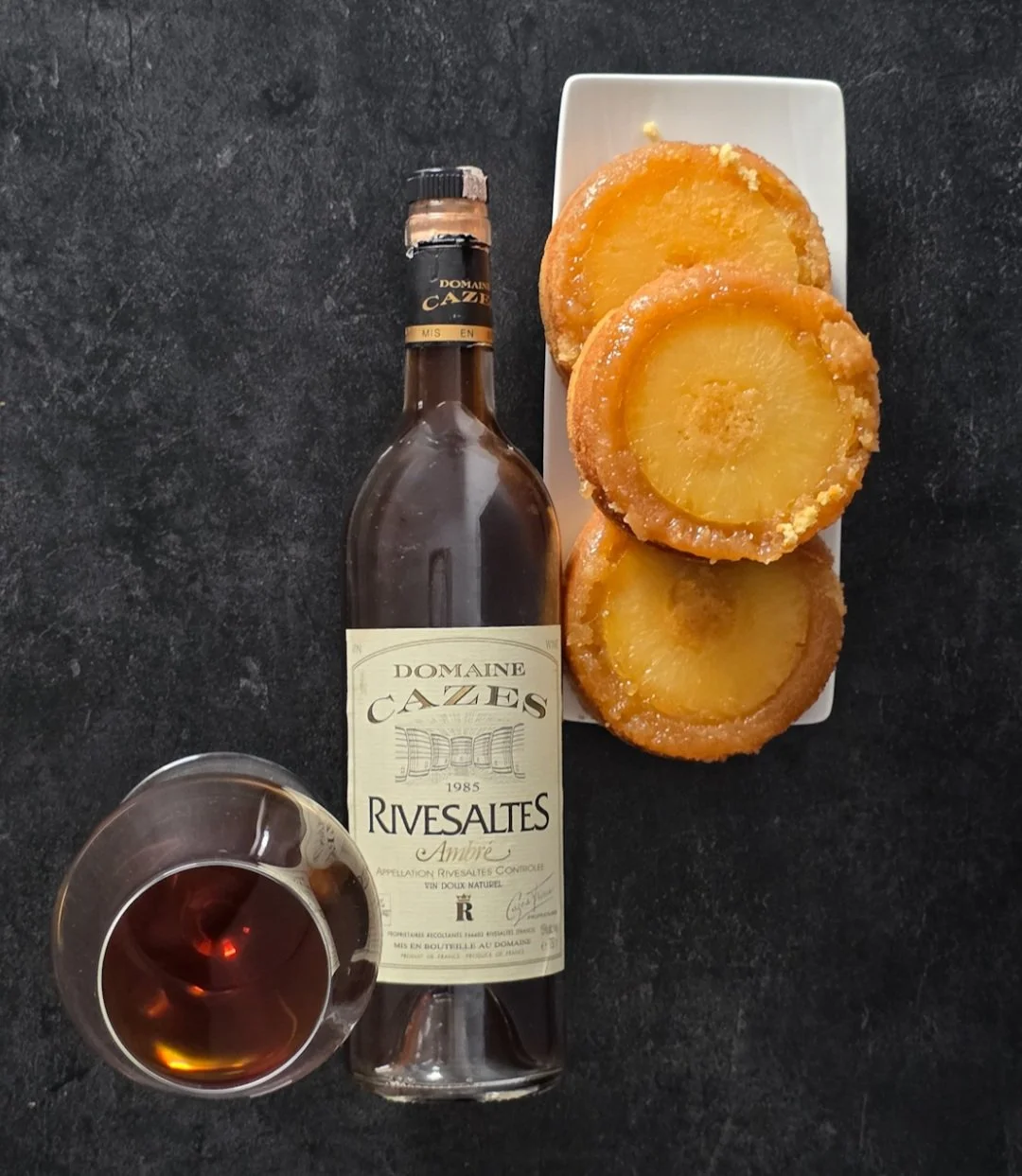
Forty-one years in the making. One afternoon in the kitchen. The complete pairing laid out — seven years in the foudre meeting Mulongo's sweet treat. This is where the wine and the cake finally find each other.
The cakes emerged warm from their cocottes.
The wine had been resting at around 6-10˚C/43-50˚F.
The first sip explained everything.
The caramel met the wine's burnt sugar immediately.
The pineapple recognised the quiet tropical fruit already hiding in the glass.
Orange zest reached naturally for the marmalade.
Fresh nutmeg settled beneath it all like an old friend.
Even the slight bitterness around the caramel's edges found its answer in the wine's lingering rancio finish.
For a moment, it stopped feeling like dessert and wine.
It felt like one conversation.
Why This Pairing Works
This pairing isn't built around sweetness alone.
It is built around aromatic architecture.
The cake reflects the wine's caramelised sugars, citrus peel, tropical fruit and evolved spice notes while deliberately keeping its own sweetness restrained.
The result is a dessert that complements the wine rather than competing with it.
That, to me, is the essence of Spice Architecture.
Build from the glass first.
Mulongo's Pineapple Upside-Down Cake
Designed to pair with mature Rivesaltes Ambré
Serves 4 | Four 440ml cocottes
Before You Begin
Use ripe but still firm pineapple slices and drain them thoroughly. Excess moisture will dilute the caramel and soften the crust.
For this recipe, I recommend reducing the batter sugar to 100g while keeping the topping at 110g packed light brown sugar. The restrained sweetness allows the caramel, citrus and spice to shine without overwhelming the wine.
Serve the finished cakes warm or at room temperature with the wine lightly chilled to 6-10˚C/43-50˚F. As doing so helps to balance their sweetness by providing a refreshing contrast, whereas a warmer dessert wine could display overwhelming levels of sweetness.
For the Topping
65g unsalted butter, divided equally between the four cocottes
110g packed light brown sugar, divided equally
1 pinch fine sea salt, divided equally
4 pineapple slices, well drained (reserve 56ml of the juice)
4 maraschino cherries (optional)
For the Batter
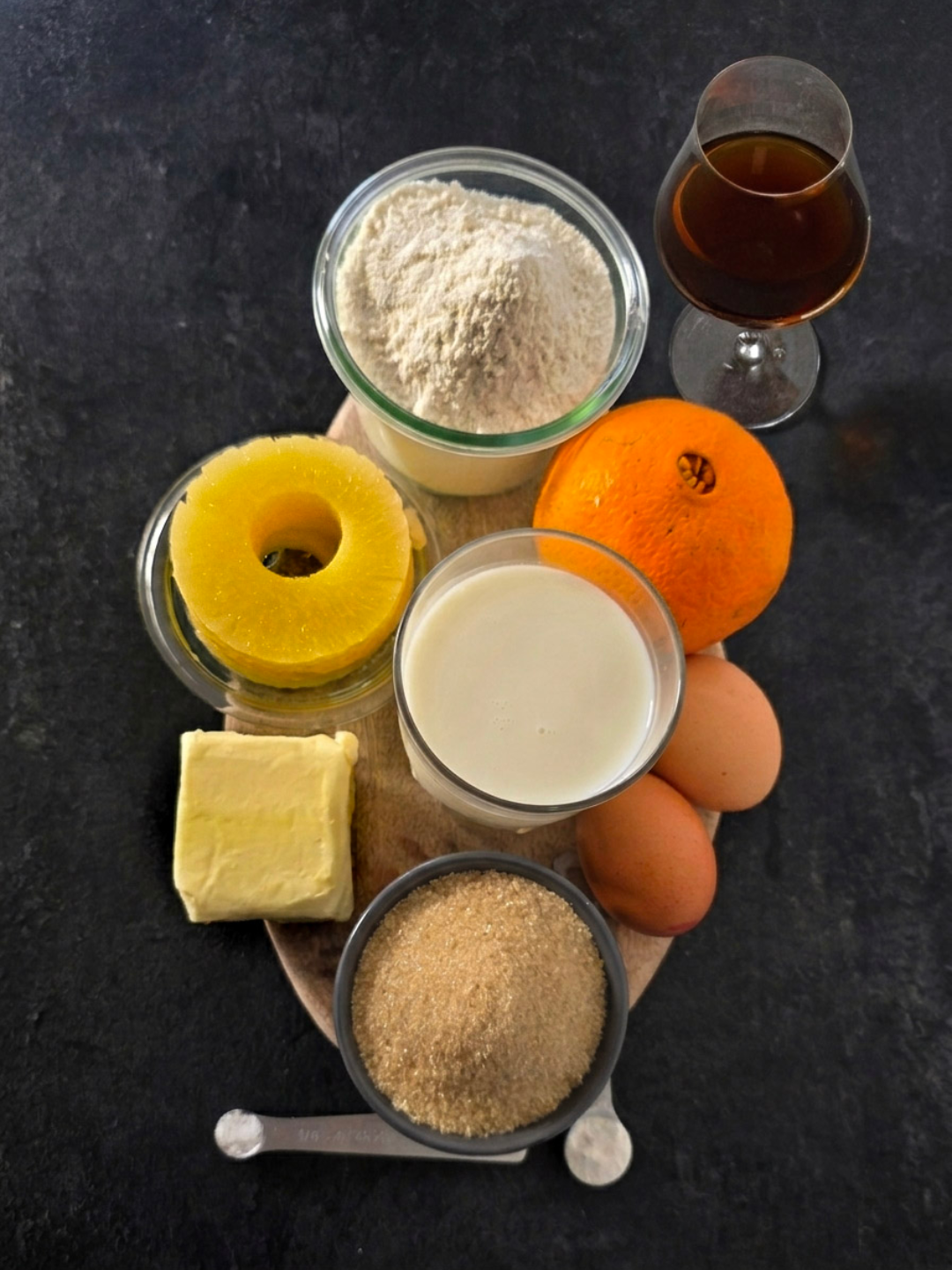
Before a single ingredient was measured, the wine was tasted. Each element on this board was chosen in direct response to what was already in the glass. This is Spice Architecture in its most literal form.
196g T55 flour
8g baking powder
2g fine sea salt
100g granulated sugar
80g unsalted butter, softened
1 large egg (approximately 50g)
1 egg yolk
1 tsp vanilla extract
½ tsp finely grated orange zest
⅛ tsp freshly grated nutmeg
Tiny pinch freshly ground Ceylon cinnamon (optional)
112ml whole milk
56ml reserved pineapple juice
Method
1. Prepare the topping
Preheat the oven to 160°C fan.
Place the four 440ml cocottes on a baking tray and divide the butter equally between them.
Bake for 3–4 minutes until melted.
Add a pinch of salt to each cocotte, then sprinkle over the brown sugar without stirring.
Lay one pineapple slice flat in each cocotte, pressing gently into the caramel.
Place a cherry in the centre if using.
2. Mix the dry ingredients
Whisk together the flour, baking powder and salt.
Set aside.
3. Cream the butter and sugar
Beat the softened butter and granulated sugar for 2–3 minutes until pale and creamy.
Beat in the egg and yolk until just incorporated.
Mix in the vanilla, orange zest, freshly grated nutmeg and cinnamon, if using.
4. Finish the batter
Combine the milk and reserved pineapple juice.
Add the dry ingredients in three additions, alternating with the liquid mixture in two additions, beginning and ending with the flour.
Mix only until smooth.
5. Portion
Weigh the finished batter.
It should weigh approximately 665–670g.
Divide evenly between the four cocottes (approximately 166–168g per cocotte).
Smooth gently from the centre outward.
The batter should sit roughly halfway up each cocotte, leaving plenty of room for the cakes to rise.
6. Bake
Bake for 25–32 minutes.
Begin checking after 25 minutes.
The cakes are ready when the tops are deeply golden, the edges begin to pull slightly away from the ceramic, and a skewer inserted into the centre comes out with a few moist crumbs attached.
7. Cool and invert
Cool for exactly ten minutes.
Set a timer.
Run a small knife around the inside edge of each cocotte.
Place a dessert plate over the top and invert confidently.
Leave the cocotte in place for about one minute before lifting.
This is your hero moment. The caramel slowly cascading over the pineapple is worth waiting for.
8. Serve
Serve warm or at room temperature with a lightly chilled glass of mature Rivesaltes Ambré (6-10˚C/43-50˚F).
Pairing Summary
Wine
1985 Rivesaltes Ambré – Domaine Cazes
Serving temperature
6-10˚C/43-50˚F
Pairing philosophy
Spice Architecture
Why it works
Caramel meets caramel. Citrus meets citrus. Tropical fruit meets tropical fruit. Acidity balances sweetness. Rancio finishes where the caramel ends.